Evolving consumer demands, always-on regulatory pressures, and new technological leaps are making suppliers REIMAGINE their entire “value chains” (The end-to-end ecosystem that keeps vehicles moving from concept to road.)
The automotive sector is both an exciting environment to operate in, but also one rife with problems to solve. Controlling the value chain while suffering through tariffs and geopolitical tensions is no joy ride. It’s a balancing act.
New tech tools are turning factories into intelligent ecosystems, where data drives every decision. These macro disruptions aren’t abstract — they’re influencing daily choices in design, manufacturing, and delivery.
We’ll discuss how these trends are unfolding and what they mean for frontline engineering and design operations, drawing on real-world insights to help you stay ahead. We’ll also cover how agile suppliers using Hawk Ridge Systems’ D2M arsenal of hardware, software, and services can turn these challenges into opportunities.
Trend 1: Electrification and the Rise of Modular Powertrains
Electrification is here, even as some pretend it isn’t.
Electrification continues to accelerate, albeit at a moderate pace, with global EV sales projected to reach around 20 million units this year, driven largely by advancements in battery technology and infrastructure. Affordability and range anxiety still hover in the mind of buyers, even with discounts, glowing consumer reviews, and around 400-700 new charging points opening up every week in the United States alone.
For suppliers, this shift emphasizes modular powertrains that allow flexible integration across vehicle platforms. Modular powertrains and electrification are deeply intertwined and let manufacturers configure vehicles for different propulsion types on shared platforms, saving money and time. This flexibility is crucial amid somewhat lagging global electrification momentum, where hybrids are gaining traction as a bridge technology.
New material needs are growing too: lightweight composites for better efficiency, advanced alloys for durability in high-voltage environments, and innovative thermal management solutions like integrated cooling systems. Battery enclosures, in particular, must balance safety, weight, and cost, often requiring rapid prototyping to meet OEM specs.
These demands push suppliers toward agile design workflows. Tools like SOLIDWORKS enable precise modeling of complex enclosures and modular components, while simulation software validates thermal performance without costly physical tests.
Hawk Ridge Systems’ 3D printing solutions, including Stratasys and Markforged technologies, allow for quick iteration on prototypes, reducing time-to-market for electrification-ready parts.
Hawk Ridge Systems supports automotive customers in this balancing act with integrated solutions:
- SOLIDWORKS for designing modular enclosures and cooling systems across powertrains
- Advanced simulation to test thermal performance in hybrid and EV scenarios
- 3D printing (Stratasys, Markforged) for rapid prototyping of lightweight prototypes
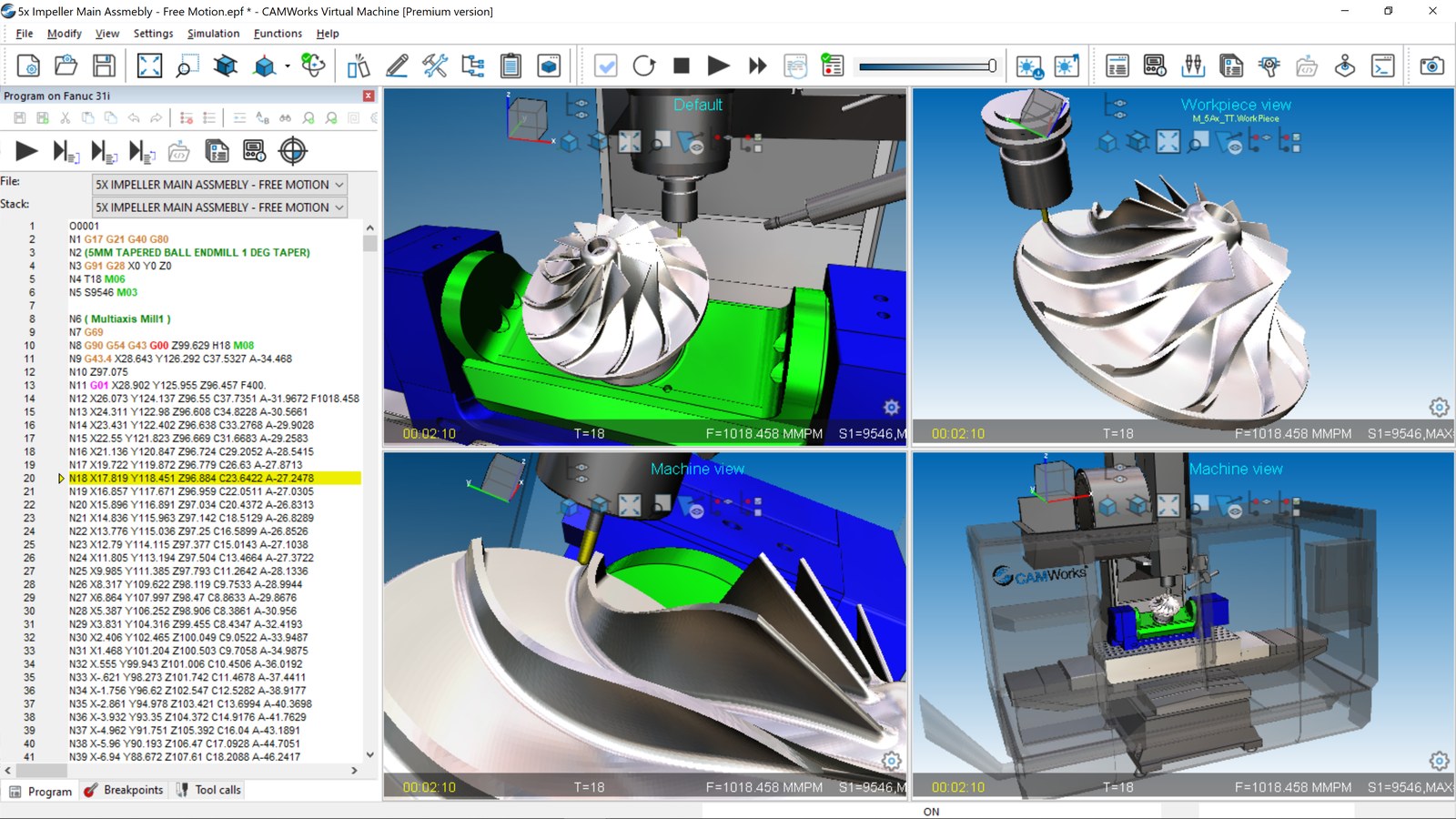
- Workflow tools like PDM and CAMWorks for managing multi-variant production
These enable faster iteration, cost control, and resilience — whether specializing in electrification components or balancing legacy and future tech simultaneously.
As the industry navigates this fragmented transition, suppliers who embrace modularity and smart tools will turn uncertainty into opportunity.
Get the Guide: Explore our supplier-focused insights and download the full Automotive State of the Industry Report.
Trend #2 Autonomous & Connected Vehicles
High-level macro trends like electrification, SDVs (Software-Defined Vehicles), and AI are probably the hottest and most important trends in automotive currently.
- Electrification and self-driving autonomous cars are rewriting design paradigms and unveiling new consumer benefits for the future like restoring freedom of movement for handicapped and disabled people.
- Software-defined vehicles, more computer than car, are set to change the engineer’s job in the near future from hardware-focused to be more heavily driven by software and design with over the air updates in mind.
- Artificial Intelligence in the automotive sector is now helping engineers use agentic and physics-based AI to speed up simulation workflows, mine data to predict changes in supply/demand, and many other applications that let human engineers apply creative thinking while AI does the manual grudgery.
Suppliers are increasingly relying on AI-driven simulation and virtual testing to accelerate iterative design cycles and validate autonomous systems without extensive physical prototypes. Things like incorporation of sensor fusion techniques (e.g., LiDAR, radar, cameras) require advanced data management and processing in CAD/CAE environments to optimize vehicle perception systems. And the safety and validation of all these things mean suppliers need traceable workflows and reliable simulation tools.
Not only that, but their tech systems must allow for multidisciplinary collaboration, integrating mechanical, electrical, and software engineering workflows. Cybersecurity protocols must be implemented early in the design phase to protect connected vehicle networks, and the use of over-the-air (OTA) updates means engineers and designers need flexible, updatable designs because these updates affect daily decisions on component modularity and software-hardware integration.
Hawk Ridge Systems helps automotive suppliers in this space with solutions like SOLIDWORKS for multidisciplinary collaboration. Customers use this to streamline daily workflows, reduce silos between disciplines, and ensure compliance with evolving safety standards, accelerating iterative design cycles without physical prototypes.
Hawk Ridge Systems also offers solutions for advanced simulation and AI-driven tools for virtual testing like SOLIDWORKS Simulation and SIMULIA. This gives suppliers enhanced simulation capabilities for physics-based modeling, data mining, and predictive analysis. These tools are crucial for validating autonomous systems, optimizing vehicle perception via sensor data processing in CAD/CAE environments, and speeding up electrification-related designs like battery integration.
Tips from Hawk Ridge Systems customers on how to stay on top of AI and integrated engineering workflows
- Leveraging Integration and Implementation Services for multidisciplinary collaboration
- Learning best practices with consulting and using SOLIDWORKS AI Virtual Assistants for things like CAD and simulation workflows
Trend 3: Supply Chain Volatility and the Push for Resilience
Supply chain disruptions have evolved from cyclical hiccups to structural challenges, fueled by tariffs, trade policies, and on-shoring incentives. In the U.S., automakers like GM have reshuffled over 25% of their sourcing to domestic suppliers since the pandemic, aiming to mitigate risks from global volatility. This volatility flattens orders, squeezes margins, and forces suppliers to navigate uncertain demand for both legacy ICE components and emerging EV tech.
Suppliers are responding by building resilient ecosystems: diversifying sources, investing in nearshoring, and enhancing visibility through AI-driven forecasting. For design and manufacturing teams, this means creating adaptable parts that can withstand supply fluctuations — think modular designs that minimize dependency on rare materials or enable easy swaps in production lines.
Hawk Ridge Systems supports this through integrated tools like CAMWorks for efficient machining and PDM for real-time data management, ensuring seamless collaboration across volatile chains. Our Business Assessment Services help assess workflows, identify bottlenecks and implement resilient strategies, as seen in partnerships with suppliers like Knapheide, where real-time BOM alignment has streamlined operations amid uncertainty.
Trend 4: Digital Transformation of the Manufacturing Ecosystem
“Digital transformation” finally has a tangible definition — it’s the AI, digital twins, and integrated design-to-delivery ecosystem that automotive OEMs and suppliers alike are using as revenue-generating engine.
Major OEMs expect full traceability, predictive maintenance, and simulation-driven insights, turning suppliers into data-centric partners.
This trend amplifies complexity: higher integration of sensors and electronics demands robust digital twins for virtual testing, while connected factories enable real-time adjustments to meet traceability standards. Suppliers must simulate entire ecosystems — from material flows to end-user performance to stay compliant and competitive.
At Hawk Ridge Systems, our portfolio, including simulation solutions, Cloud PLM, and DELMIA, empowers these capabilities. Digital twins allow virtual validation of designs, slashing development costs, while our training and implementation services ensure teams maximize these tools.
What It All Means for Tier 1, 2, and Aftermarket Suppliers
These trends converge to create a high-stakes environment: Tier 1 suppliers face pressure to innovate at scale, balancing electrification investments with supply risks. Tier 2 players must enhance agility to support modular builds, while aftermarket suppliers capitalize on repairability in an era of software-defined vehicles. Across the board, the winners will be those who integrate hardware, software, and services to foster engineering agility — turning disruptions into edges.
Real-world decisions reflect this: teams are prioritizing tools that enable continuous design-validation loops, resilient sourcing, and data-driven manufacturing.
How to Respond: Smart Tools, Smarter Workflows
To thrive, suppliers need a holistic approach. Start with assessments to pinpoint workflow gaps, then deploy integrated solutions for end-to-end optimization. Hawk Ridge Systems offers this full stack: from SOLIDWORKS for design and simulation to 3D printing for rapid prototyping, and services like business consulting to align it all.
We’ve helped automotive leaders like Speedway Motorsports and Knapheide achieve real-time alignment and faster innovation. Whether it’s simulating cooling systems for EVs, managing volatile BOMs, or building digital twins for traceability, our ecosystem turns trends into actionable advantages.
Ready to Accelerate Your Transformation?
The automotive landscape of 2026 demands foresight and tools that deliver. Download our free “Automotive Suppliers State of the Industry Report” for a step-by-step guide on the major trends and the major solves. Or explore our supplier-focused insights, including case studies and practical tools, to see how Hawk Ridge Systems can support your journey. Contact us today to discuss your challenges — let’s drive innovation together, one acceleration at a time.