The manufacturing industry is facing one of its toughest challenges in decades. Skilled labor shortages and a wave of employee retirements are forcing companies to rethink how they operate. Traditional hiring strategies simply cannot keep pace with current demand.
Fortunately, automation has emerged as an effective solution, not by replacing people, but by acting as a powerful workforce multiplier through smarter automations and workflow engineering.
Let’s investigate the situation as it stands today.
The State of the Labor Market in 2026
Manufacturing is experiencing a perfect storm:
- Millions of experienced workers are retiring
- Younger generations are not entering trade careers at the same rate
- Persistent skill gaps exist in CNC programming, engineering, and advanced manufacturing roles
Even with aggressive recruiting, many companies struggle to fill open positions. The result? Delayed production, missed deadlines, reduced output, and increased overtime costs.
Deciding to simply hire more people is no longer a viable strategy.
Why Automate Manual Processes in Manufacturing?
One of the questions some manufacturers ask is why they should automate manual processes in the first place.
The answer is simple: repetitive work limits productivity, increases burnout, and creates inefficiencies across the manufacturing workflow process. Modern engineering workflow automation allows manufacturers to streamline operations while enabling employees to focus on higher-value work.
Plus automation can play a key role in addressing the labor shortage.
Despite fears to the contrary, modern automation is not about eliminating jobs. It allows companies to use human capabilities where they make the most sense.
Instead of asking workers to perform repetitive, physically demanding, or low-value tasks, smart automation tools take over the monotonous work so employees can focus on higher-value activities that require judgment, creativity, and problem-solving.
Automated Manufacturing Processes Driving Efficiency
Key technologies leading this shift include:
- DriveWorks – Automates product configuration, design and drawing generation, and quote creation
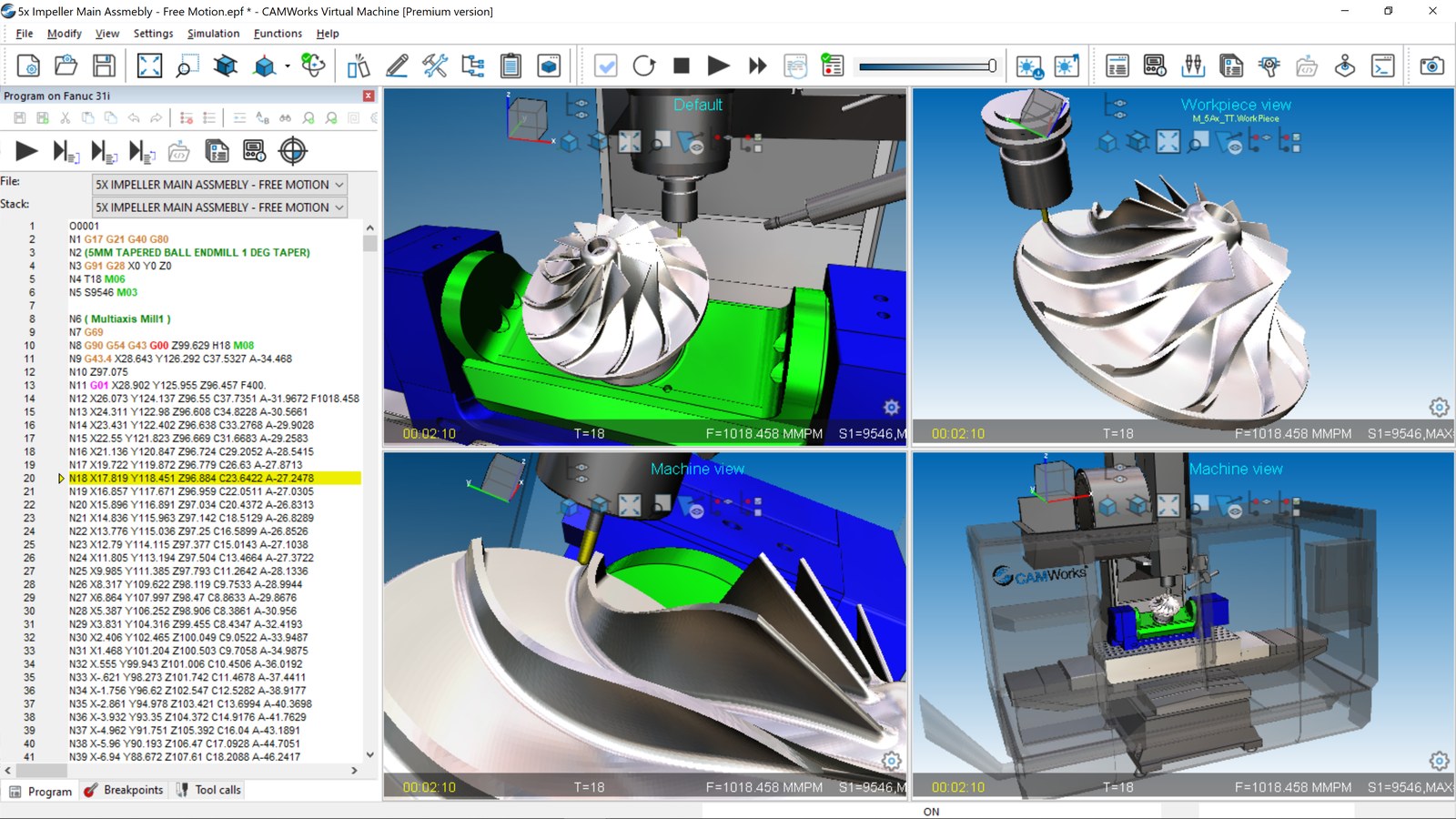
- CAMWorks – Automates CNC programming and toolpath creation
- DELMIA – Optimizes factory scheduling, resource allocation, and production flow
- AI-powered tools – Assist with design optimization, quality inspection, and predictive maintenance
By handling rote tasks, these automated manufacturing processes allow manufacturers to produce more with the same (or fewer) people, while simultaneously reducing errors and improving employee satisfaction.
Engineering Workflow Automation in the Real World
Those same technologies produce efficiencies that cannot be met with a traditional workforce.
Automated Design Configuration
Companies that offer custom or configurable products no longer need engineers to manually redraw models for every variation. DriveWorks captures design rules once and automatically generates accurate models, drawings, and BOMs, freeing engineers to focus on innovation and complex custom work.
This is one of the clearest examples of the benefits of automating a manual process and reducing repetitive engineering work while improving consistency and speed.
CAM Automation
Programming CNC machines has traditionally been a major bottleneck requiring highly skilled programmers. With CAMWorks, feature recognition and rules-based machining strategies dramatically reduce programming time, allowing one programmer to support multiple machines and more complex jobs.
For manufacturers exploring how to automate manufacturing processes, CAM automation is often one of the fastest ways to improve throughput and reduce dependency on skilled labor.
Factory Flow Optimization
Today, the same workforce can achieve significantly higher throughput without additional headcount. DELMIA’s factory simulation tools optimize production sequences, reduce idle time, and minimize bottlenecks.
These types of automations and workflow engineering strategies help manufacturers create more agile and more efficient operations.
The Cost Benefits of Automating Workflows
Manufacturers adopting automation often discover benefits that go beyond labor savings.
The cost benefits of automating workflows can include:
- Faster production cycles
- Improved machine utilization
- Fewer production errors and scrap
- Better schedule predictability
- Increased employee productivity
Automation also creates more scalable operations, allowing manufacturers to grow output without increasing labor costs at the same rate.
Upskilling Through Technology
Automation can also be used to elevate a workforce.
As repetitive tasks are automated, workers can transition into new, more valuable roles:
- Operators become automation technicians
- Programmers become process optimizers
- Engineers shift focus from routine documentation to strategic design
Modern technologies also include built-in instructions, simulation-based training, and intuitive dashboards that make upskilling faster and more effective. The result is a more engaged, capable, and future-ready workforce.
The Cultural Shift Behind Successful Manufacturing Workflow Process Improvements
One of the biggest barriers to adopting automation is fear, the belief that automation means job loss.
Successful manufacturers address this head-on with strategic transparency:
- Clearly communicating that automation is being implemented to protect jobs and grow the business
- Involving employees early in the process
- Celebrating wins and sharing productivity gains with the team
When employees see automation removing drudgery and giving them more time for meaningful work, resistance often turns into enthusiasm.
Conclusion
Automation and AI are not replacing the manufacturing workforce — they are empowering it.
By reducing reliance on repetitive manual labor, optimizing workflows, and creating automated manufacturing processes, manufacturers can overcome labor shortages while building more resilient, productive, and competitive operations.
Ready to turn automation into your competitive advantage?
Contact Hawk Ridge Systems today to discover how DriveWorks, CAMWorks, DELMIA, and other intelligent solutions can help your team do more with less — and build a stronger, more sustainable workforce for 2026 and beyond.