How Automation Can Significantly Improve Manufacturing Workflows
Manufacturers are under constant pressure to move faster, reduce costs, and deliver higher-quality products with fewer resources. Yet many organizations are still relying on manual workflows that quietly drain productivity.
The costs are not always obvious but add up quickly. A few extra minutes updating CAD files. A programming delay on the shop floor. Engineers recreating work because the latest file version cannot be found. Individually, these issues may seem minor. Collectively, they create a significant drag on profitability and growth.
For many manufacturers, “business as usual” has become a silent profit killer.
The good news is that modern automation tools are changing the equation. By automating repetitive engineering and manufacturing tasks, companies can reduce waste, improve consistency, and create more scalable operations.
Common Workflow Challenges in the Manufacturing Industry
Manual processes often become normalized over time when teams adapt to inefficiencies. But hidden costs accumulate in several areas of the business.
Engineering Bottlenecks
Engineering teams frequently spend valuable time on repetitive tasks that add little strategic value.
Examples include:
- Recreating similar CAD models
- Updating drawings manually
- Revising Bills of Materials
- Copying project data between systems
- Correcting avoidable data entry errors
These activities consume hours that could otherwise be spent on innovation, product development, or customer support.
As product complexity increases, manual workflows also increase the risk of design inconsistencies and costly downstream mistakes. Even a small data error can create manufacturing delays, scrap, or rework.
Shop Floor Inefficiencies
Manual workflows create issues beyond engineering.
Manufacturers who look for these inefficiencies often discover that highly skilled employees spend a surprising amount of time managing administrative tasks instead of focusing on high-value production work.
CNC programmers may repeatedly create similar toolpaths from scratch. Production teams may wait for updated documentation or revised drawings. Scheduling changes may require manual coordination between departments.
These delays affect throughput, machine utilization, and lead times.
Lost Collaboration and Duplicated Effort
Disconnected systems and poor data management create another hidden cost: duplicated effort.
When files are stored in multiple locations or version control is inconsistent, employees waste time recreating work that already exists or searching for information. Teams may unknowingly work from outdated data, resulting in communication breakdowns and production errors.
The larger the organization, the more these inefficiencies compound.
What are the best tools for manual process automation?
Instead of relying on manual intervention at every step, automated systems streamline workflows and reduce opportunities for error. Here are some of the tools that can help.
DriveWorks: Automating Repetitive Design Tasks
For manufacturers offering configurable or customized products, repetitive CAD work can consume significant engineering resources.
DriveWorks helps automate:
- Product configuration
- CAD model generation
- Drawing creation
- BOM generation
- Quote creation
By capturing engineering rules once in DriveWorks, companies can automatically generate accurate outputs for new product variations in minutes rather than hours.
This not only accelerates design cycles but also improves consistency across projects.
CAMWorks: Faster, More Consistent CNC Programming
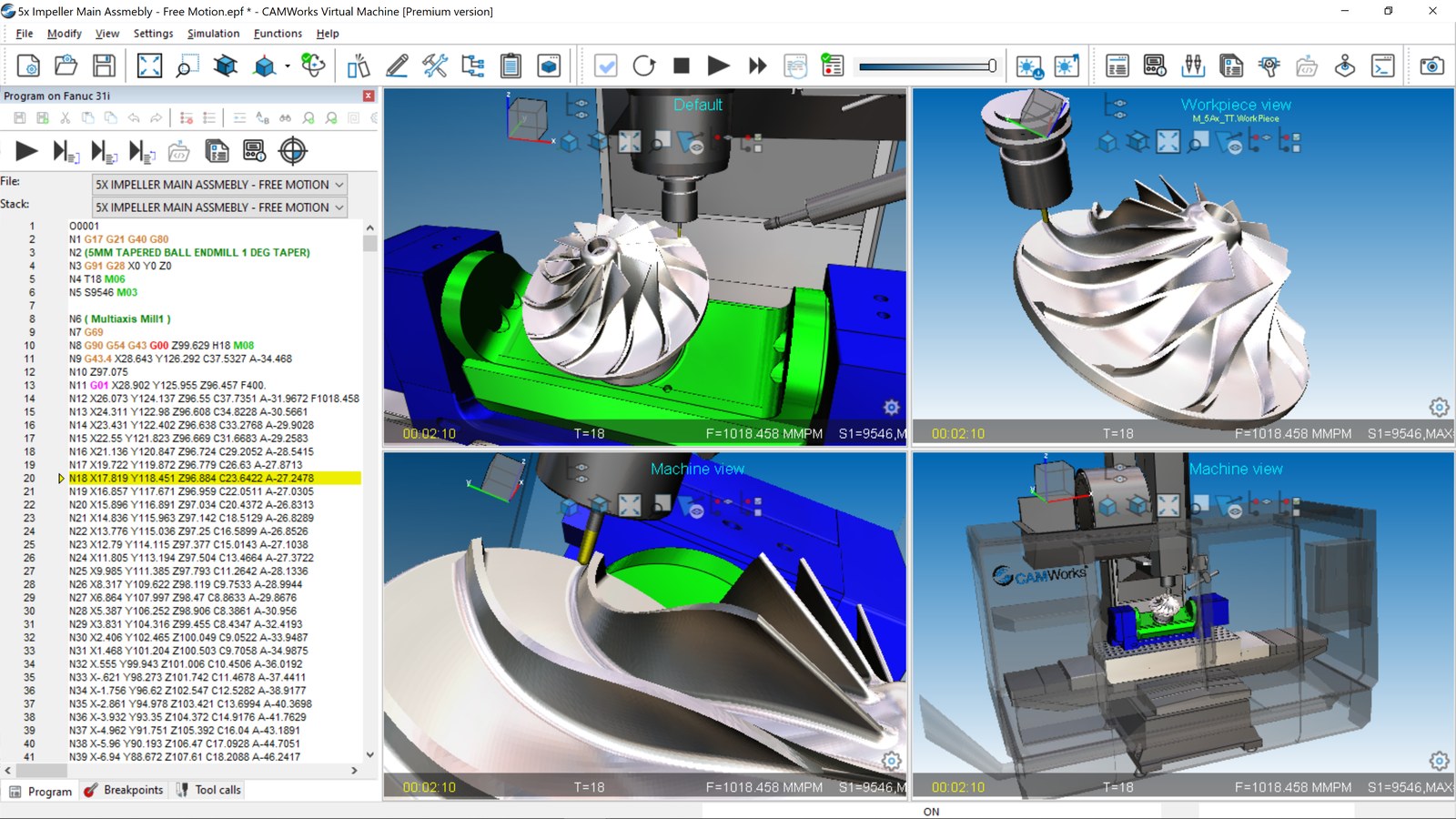
CAMWorks helps manufacturers reduce programming logjams through automation and feature recognition technology.
Instead of manually programming every feature, CAMWorks can:
- Automatically recognize machinable features
- Apply standardized machining strategies
- Reduce repetitive programming tasks
- Improve programming consistency
This allows programmers to support more machines and more complex jobs without increasing workload.
The result is faster throughput, reduced setup time, and more efficient use of skilled labor.
PDM and PLM: Eliminating File Chaos
Data management platforms like PDM and PLM help manufacturers maintain control over engineering information.
These systems improve:
- File version control
- Collaboration between departments
- Document accessibility
- Process traceability
- Change management
With centralized data management, teams spend less time searching for files and more time executing projects efficiently.
It also reduces the risk of costly mistakes caused by outdated or incorrect data.
Automation Offers Multiple Cost Reductions in Manufacturing
The real impact of automation extends far beyond labor savings alone. There are a number of improvements that can result in measurable gains, even for modest operations.
Scrap & Rework Rate
The amount of output that is lost due to defects and errors is mostly avoidable.
Better output can be achieved from the same production resources with improved consistency, reduced manual errors, and the ability to catch quality issues earlier in the process can be obtained through automation.
These have a direct impact on material costs, capacity, and customer satisfaction.
Machine Utilization
Automation tools such as feature recognition and rules-based machining strategies help standardize programming processes while reducing repetitive work. As a result, manufacturers can shorten lead times, improve consistency across jobs, and increase throughput without adding additional programming resources.
Reducing CNC programming time by as little as 20–30% can significantly impact machine utilization and production capacity.
Faster Quoting
Automated quoting and configuration tools allow manufacturers to deliver faster proposals while maintaining accuracy. Faster response times can improve customer satisfaction and increase win rates.
Engineering Change Cycle
Missteps in processing and implementing design changes can delay jobs, create confusion, and increase risk on the floor.
By using automation to streamline approvals, automatically update documentation, and sync changes across systems and teams, there is minimal disruption to production, resulting in multiple cost savings.
Time Savings Per Project
The list of ways automation results in cost reductions would not be complete without mentioning labor.
If engineers save just two hours per project through design automation, those savings compound quickly across dozens or hundreds of projects annually.
Labor Efficiency and Scalability
Automation allows manufacturers to grow output without increasing headcounts at the same rate.
Rather than replacing employees, automation enables teams to focus on higher-value work:
- Engineers spend more time innovating
- Programmers optimize processes instead of repeating tasks
- Production teams spend less time waiting for information
This creates more scalable and resilient operations, especially in today’s challenging labor market.
A Jaw-Dropping Example of Automation Cost Savings
RPG Off-Road, a custom vehicle manufacturer and consultant to OEMs like Shelby, Hennessey, and Roush, was spending $40,000 a month outsourcing machining labor.
By bringing production in-house with SOLIDWORKS and CAMWorks — using Advanced Feature Recognition to automate programming and VoluMill for high-speed roughing — they now go from design to finished part in under an hour and dramatically extended tool life (hundreds of parts off a single end mill).
That’s the compounding effect of automation: less outsourced labor, faster throughput, lower tooling costs, and a team that scales without adding headcount. Read the full RPG Off-Road story.
Getting Started with Automation
Manufacturers do not need to automate everything at once.
The best approach is often to start small and focus on high-impact opportunities.
Identify Low-Hanging Fruit
Look for repetitive processes that:
- Consume excessive time
- Frequently cause errors
- Depend heavily on manual data entry
- Create recurring bottlenecks
These areas often provide the fastest ROI.
Pilot, Measure, and Scale
Successful automation initiatives typically begin with a focused pilot project.
Measure:
- Time savings
- Error reduction
- Throughput improvements
- Resource utilization
Once value is demonstrated, organizations can expand automation efforts across additional departments and workflows.
Conclusion
Manual workflows may feel manageable in the moment, but their long-term costs can be substantial. Lost productivity, repeated errors, delayed production, and duplicated effort all reduce profitability and limit growth potential.
Automation provides manufacturers with a practical path toward more efficient operations.
By automating repetitive tasks, improving data consistency, and streamlining collaboration, companies can reduce waste while empowering employees to focus on more high-value tasks.
Ready to see where automation could have the biggest impact on your operation?
At Hawk Ridge Systems, we help manufacturers identify savings opportunities and discover how tools like DriveWorks, CAMWorks, and PDM solutions can help your team work smarter and scale more efficiently.
Talk to an automation expert today.