Most engineering teams do not think about who owns their CAD software. The tools open every morning, the models rebuild and the drawings go out the door. Then a headline lands, and a question nobody had on the agenda suddenly matters: Who owns your engineering stack, and should you care?
In October 2026, that question became real for a large share of manufacturers. Schneider Electric and PTC announced a definitive agreement under which Schneider Electric will acquire PTC, the company behind Creo CAD, Windchill PLM and Onshape cloud CAD. If you use any of those tools, or any engineering software from a vendor that changes hands, this guide walks through what the PTC acquisition, and any vendor acquisition, does and does not change, and the questions worth asking before your next renewal.
What Was Announced on October 5, 2026
According to the joint press release published by PTC, Schneider Electric agreed to acquire PTC in an all-cash deal at $205 per share, valuing PTC’s equity at approximately $22.6 billion. Closing is anticipated by Q3 2027, subject to approval by PTC shareholders and required regulatory approvals. Reuters reported that it would be Schneider Electric’s largest-ever acquisition.
The companies describe the goal as a unified digital thread that connects product design and engineering data with Schneider Electric’s industrial automation and AI capabilities, while “preserving an open-by-design approach across vendors and hardware.”
Two points are worth keeping in mind. First, a signed agreement is not a closed deal, so ownership has not changed yet. Second, the announcement describes a strategy, not a product roadmap. Specific decisions about individual products, packaging and pricing have not been published, and anyone who tells you otherwise is guessing.
Why Industrial Software Consolidation Matters to Engineering Teams
For years, choosing a CAD tool was mostly a comparison of features: sketching, surfacing, sheet metal, drawings. That comparison still matters, but it is no longer the whole story. CAD now sits inside a much larger web of software that includes data management, PLM, simulation, manufacturing and, increasingly, automation and AI.
As larger industrial companies assemble those pieces into platforms, the conversation shifts from tool versus tool to platform versus platform. Your design software becomes one part of someone else’s broader strategy. That can bring real benefits, such as deeper integration and more investment. It can also bring new priorities that may or may not match yours.
What an Acquisition Does Not Change Overnight
An announcement does not change the software on your workstation. Your files, your templates and your workflows work the same way today as they did before the announcement. There is no reason to make a rushed decision, and a knee-jerk switch can cost far more than it saves.
What an acquisition can change, over months and years, is direction. That is why the most useful response is not to react, but to ask better questions and write down the answers.
Five Questions to Ask Your Vendor After an Acquisition
These questions apply to any engineering software vendor that changes ownership. Ask them of your account team, and ask for answers you can keep on file.
1. What Does the New Owner’s Strategy Mean for the Product Roadmap?
Every buyer has a reason for buying. Ask how the products you depend on fit that reason, which capabilities are planned for the next few releases and whether any of those plans have changed since the announcement. Look for specifics rather than general statements of commitment.
2. What Happens to Integrations and Interoperability?
Your CAD tool connects to PDM or PLM, to ERP, to suppliers and to customers who may use different software. Ask how tightly the CAD and PLM products will be tied to the new owner’s wider ecosystem, and whether open interfaces and support for other vendors’ systems will stay as open in practice as they are today.
3. How Might Packaging and Licensing Evolve?
After a change in ownership, product bundles, subscription terms and cloud offerings are common areas to revisit. Ask what is planned for your current licenses and maintenance terms, whether new bundles are expected and how much notice customers will receive before any change takes effect.
4. Where Will R&D Investment Go?
A combined company has more products competing for the same engineering budget. Ask how investment will be balanced between the established desktop tools you use every day, cloud-native products and new platform initiatives. The answer tells you a lot about where your tools sit on the priority list.
5. Does the Platform Still Match Your Digital Thread and AI Goals?
This question is about you as much as the vendor. If your plan is to connect engineering data with manufacturing, service or the factory floor, the new owner’s direction may be a strong fit. If you value vendor independence, or your automation runs on another supplier’s hardware, weigh how the combined portfolio aligns with that plan.
Questions to Ask Inside Your Own Organization
The vendor is only half of the conversation. Before you can judge any answer, you need a clear picture of your own situation:
- Renewal timing: When do your current agreements renew, and what does each term length commit you to?
- Customization and integration: How many macros, add-ins and system connections would make a change difficult?
- Cloud plans: Are you moving more product development infrastructure to the cloud, or keeping it on premises?
- Vendor strategy: Is reducing the number of technology vendors important, or is staying independent more important?
- Engineering to manufacturing: How important is connecting design data with production and operations?
- Licensing and administration: Are costs or license management already a pain point?
- Last benchmark: When did you last compare your current platform with alternatives?
When you do compare options, focus on the work your team does most of the time rather than features you might use once a year. A tool that wins on a rare edge case can underperform on everyday tasks.
Treat Your Next Renewal as a Checkpoint
With closing anticipated by Q3 2027, many customers will renew at least once before ownership changes. A renewal is a natural checkpoint. Use it to collect your vendor’s answers, review your own priorities and decide whether a closer look at alternatives is worth the effort. For some teams, the right outcome is staying put with better information. For others, it is a planned evaluation on their own schedule.
If a deeper review makes sense, be realistic about what changing tools involves, from data migration and training to the temporary dip in productivity. Our post on how adoption maximizes technology ROI covers why the rollout matters as much as the purchase, and our guide to the digital thread in manufacturing explains what connected engineering data looks like in practice.
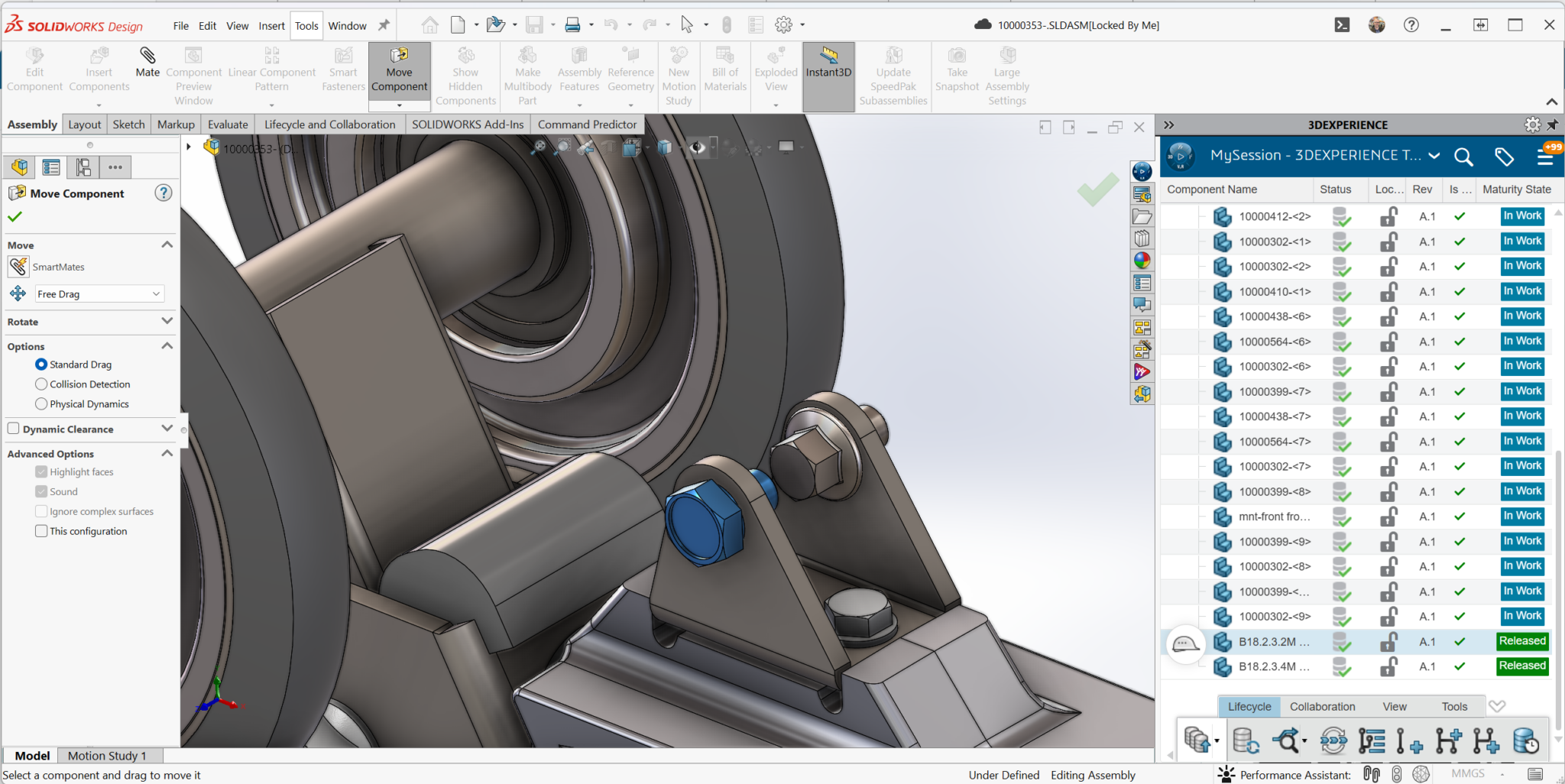
Part of that evaluation can be low-risk. SOLIDWORKS, for example, includes 3D Interconnect, which lets you open native files from other CAD systems, including Creo, without converting them first, so a pilot does not have to start with a full data conversion.
Frequently Asked Questions
Will My CAD Software Stop Working After My Vendor Is Acquired?
An announcement by itself does not change the software you already use. What can change over time is the roadmap, packaging, licensing and integrations, which is why it is worth asking your vendor directly and getting answers in writing.
Should I Switch CAD Software Because My Vendor Was Acquired?
Not automatically. An acquisition is a good reason to review your options, not a reason to switch on its own. Compare the vendor’s answers with your long-term goals, and weigh the real costs of changing before you decide.
When Is the Schneider Electric Acquisition of PTC Expected to Close?
According to the joint press release, closing is anticipated by Q3 2027, subject to PTC shareholder approval and required regulatory approvals.
What Questions Should I Ask My CAD Vendor After an Acquisition?
Ask about the product roadmap, integrations and interoperability, packaging and licensing, where R&D investment will go and how the platform aligns with your digital thread and AI goals.
Talk Through Your Options
If the news has your team asking questions about its engineering platform, Hawk Ridge Systems can help you think through them, whatever you decide. Contact Hawk Ridge Systems to start the conversation.