Tell me about how you got into engineering.
I grew up in Minnesota and then I went to the engineering program at The University of Minnesota. I think even probably as early as middle school or high school, I knew I wanted to go down some type of engineering path. I just found mechanical things or just taking stuff apart and putting it together and knowing how stuff worked rather than having this black box in front of me — I found that really satisfying.
I remember there was this little project or experiment that one of my elementary school teachers had, which really stuck in my brain as this itch. They had this box and they were showing it to us. There were three strings on the top and three strings on the bottom and you would pull on string A and then it would move the bottom string in the middle and then you pull on string B and it would move the last string or you do some combination and move them in a weird way.
You’d pull the strings and try to see what everything does and then try to draw a picture of what you think is happening on the inside. I drew a bunch of random stuff — pulleys and levers and all this stuff — I’m like, oh, these things are connected like this because when they move together, it moves this one.
I don’t actually remember what it was on the inside. I think she either didn’t open it and show us, or when she did, it was just maybe underwhelming and I just forgot about it. But I remember that when I went home, I really wanted to know what was going on inside. I didn’t just want to see the outside and pull on the strings and levers. I wanted to actually find out how it worked.
And I think that feeling has kind of stuck with me throughout a lot of projects and just thinking about a lot of different types of problems and different products that you might interact with. Why does my mouse work? And if I know that, then the next time it gets weird I can open it and clean it out or fix it or something like that rather than throwing it away and buying a new one.
If Dale Ford (CEO at Hawk Ridge Systems) asked you to build an app or to open a new line of business to better future-proof Hawk Ridge, what would you pitch?
Have you seen MythBusters? Something like that — anyone can watch MythBusters. You don’t have to be there and understand how they’re building this thing or making this. It’s just fun and entertaining to watch.
Today, on the Hawk Ridge show, we’re gonna do this random project. Maybe we happen to use a product of ours, maybe we don’t. But it’s just a fun way to kind of get people either engaged or interested. I think it’s also nice if it was something kids could watch too, and they would eventually want to go into some type of engineering. So, a cool online show in the style of MythBusters or some type of building show like This Old House, but instead of fixing a house it’s let’s do this 3D scanning project today or something like that.
How did you end up at Hawk Ridge Systems and what were you doing before?
I actually came directly to Hawk Ridge right out of school. I graduated in the spring of ‘21 and I started at Hawk Ridge in August ‘21.
At the time, one of the biggest reasons that made me swing towards Hawk Ridge, apart from one of the other offers I had, was I knew Hawk Ridge was going to involve teaching — presenting and content creation.
I had a little bit of experience teaching. I worked as a teaching assistant for a semester in school for a computer science course. And before that I would do summer tech camps for kids in school as well. So, I had a pretty good grasp on knowing that I just liked showing people how to do stuff and seeing them have that light bulb moment and figure out, oh, that’s why that works or that’s how you do it.
But the other side of that coin was the presentation; the content creation — I had debilitatingly bad stage fright.
I couldn’t get up in front of people and speak confidently or eloquently to save my life. So I kind of figured, well, I’m just going to go take this job and either I’m going to learn how to get better at that or I’m going to be fired. That was a nice challenge to improve.
It was a frustrating experience where a lot of times in school we had to do presentations and usually I’d know what I was talking about. In one assignment, we had to do this little robot project. I built the robot and then I had to talk about the different stages of what I did.
I’m the one that built this, I know all this stuff about it, but then I couldn’t communicate it very well and it was really frustrating. The stuff I have inside my head is not always what I’m able to communicate to other people’s heads. So bridging that gap I think is a really nice ability to have.
What do you think helps you get better? Just practice?
Just practice doing it, I guess. Kind of just de-sensitizing yourself to it. It’s still — I’m still not loving it, but it’s definitely more of a comfortable thing I can do now where I can just slow down and make sure that what I’m saying is actually making sense and actually putting the idea that’s in my head into other people’s heads without getting too encumbered with random tangents or clamming up.
What are you working on most days?
I’ve been teaching some classes on simulation. I’ve always been teaching simulation, or at least for a long time now, but I’ve also been moving into some of our more advanced simulation courses which kind of offers a little bit more of a hurdle just because the topics are more complex, the students are more knowledgeable. So, the questions that you’re gonna get from them are gonna be tougher.
But then the solving and the problems that you can actually tackle with a project are also more interesting than what you would with a lower level. The highs are higher and the lows are lower. You might really get stumped by somebody, but then you can really go through some interesting scenarios with those products.
And then recently — I did some Flow Simulation consulting with a customer where basically it’s helping them get up and running. I’m helping them optimize their oven simulation. They’re completely or almost completely new to Flow Simulation and I’m basically doing a private training course.
Do you like that better than the big group classes or is it different?
I don’t think it’s better. I think it’s just different in its own way where you’re just focusing on one person’s specific thing rather than going through a pre-made book.
What’s the weirdest / most fun project you’ve ever had at Hawk Ridge?
The funnest project I’ve worked on was probably our A3D Manufacturing webinar. I basically designed some rock climbing holds and then had them 3D print them and then they also did some paint and dye to show off the A3D post-processing capabilities. You can check out the webinar Design, Print, Climb: Crafting Climbing Holds with SOLIDWORKS for more information.
I got to design them in SOLIDWORKS on my screen and then A3D Manufacturing 3D printed them and shipped them to me. I put them up on my climbing wall and they actually worked great. I was a little bit scared about that because my climbing wall is just a little fun training wall over a hardwood floor. So, if it breaks, then I’m probably gonna break too. It was fun to make something on the screen and then have it actually in my hand supporting my weight.
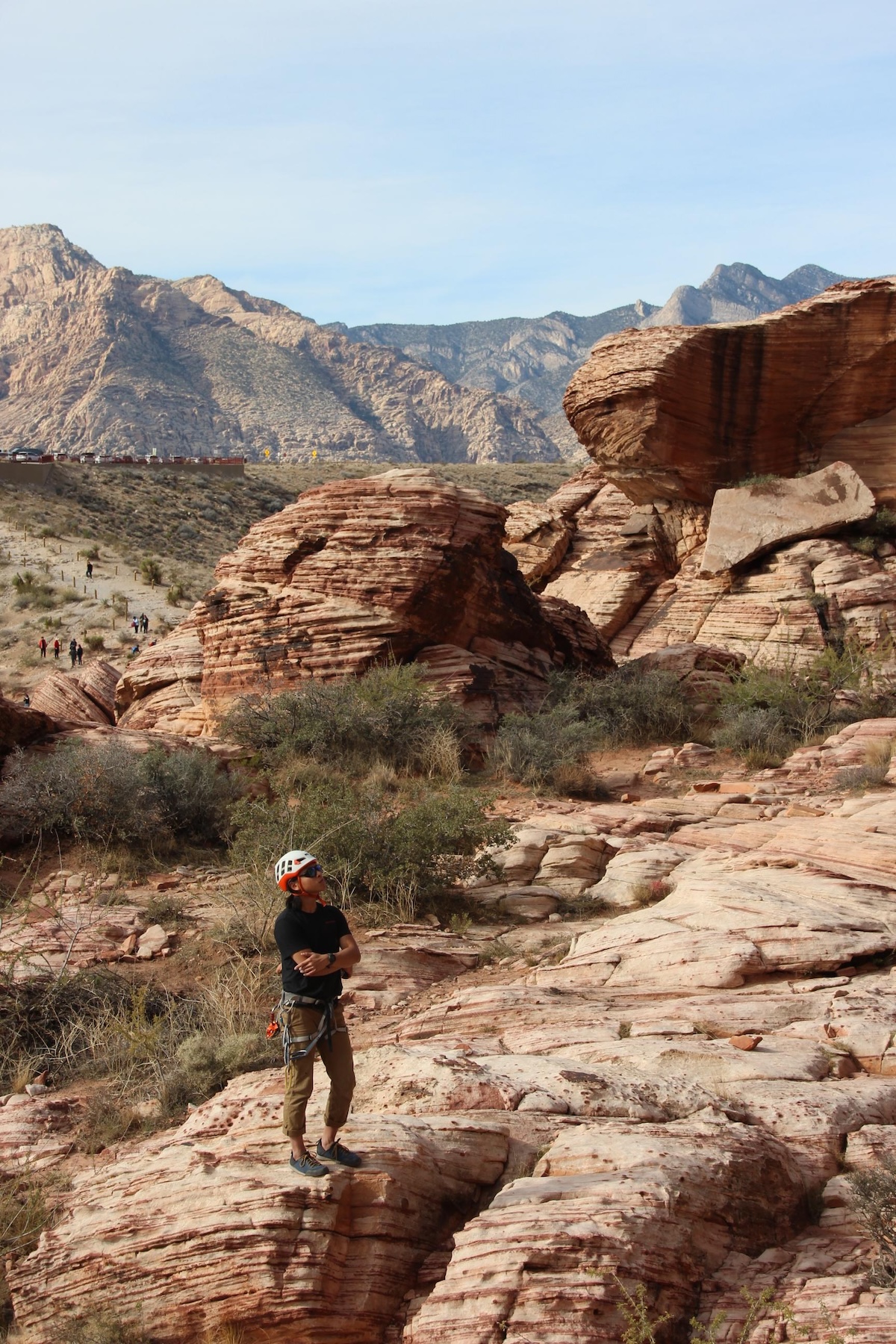 Kenny Truong finds some of his most memorable moments at Hawk Ridge Systems outdoors, on a hike.
Tell me about your side-quest / pet projects.
A lot of my non-work projects right now are on my car. I live in western Colorado, and a lot of my weekends here involve me going mountain biking or rock climbing or skiing or camping. I don’t go camping just to camp — it’s usually camping and then I’m gonna go do one of the above.
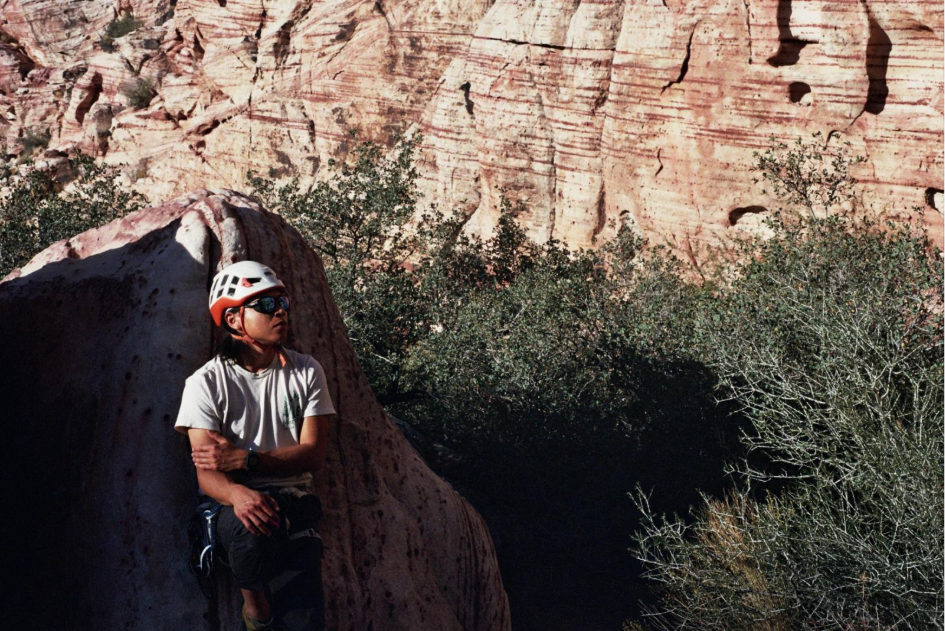 Outdoor exploration is one of the pastimes Kenny Truong pursues outside his applications engineering work.
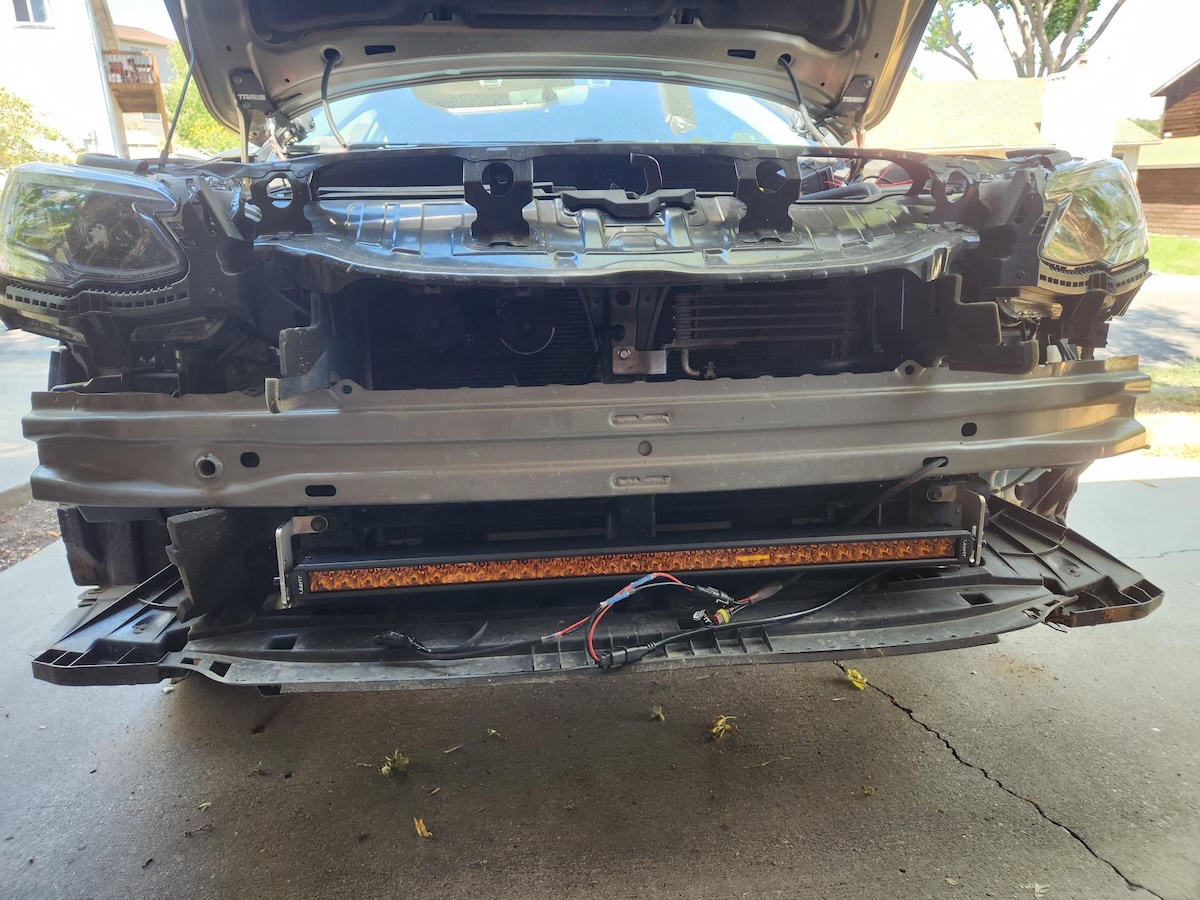
I’ve been building some little projects for the car. I actually have some articles about them on the website already. I built a little light bar mount and that was a pretty simple sheet metal part that I made inside SOLIDWORKS. You can read about it here: How to Create a Hidden Light Bar for a Car Using SOLIDWORKS.
My ongoing thing lately has been this drawer system for the back of the car. It’s basically a little platform that goes in the trunk, and I have a drawer that slides out. It’s kind of just a miniature pantry. I throw all of my Nerds gummy clusters in there and my other snacks. And then I also have a second slide with a fridge on it, so I can slide a fridge out of the trunk, and it will run on a battery.
So, after I’m done biking or skiing or climbing, then I can eat a bag of gummy clusters and have a cold beer while I’m out in the middle of the desert.
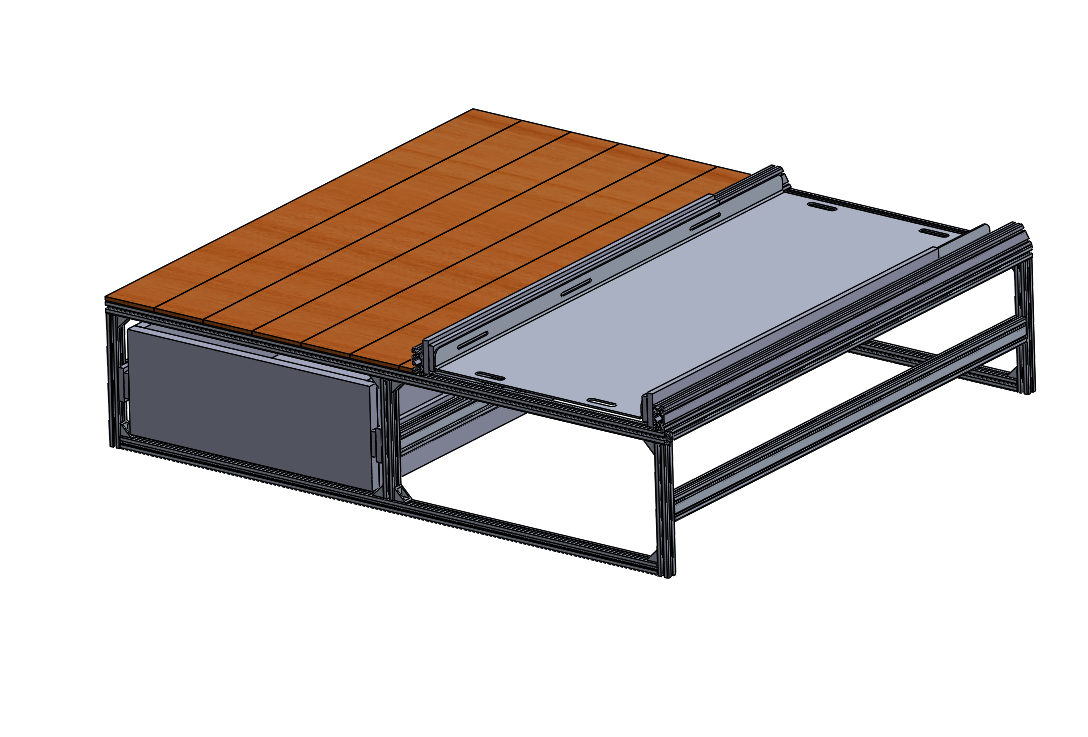
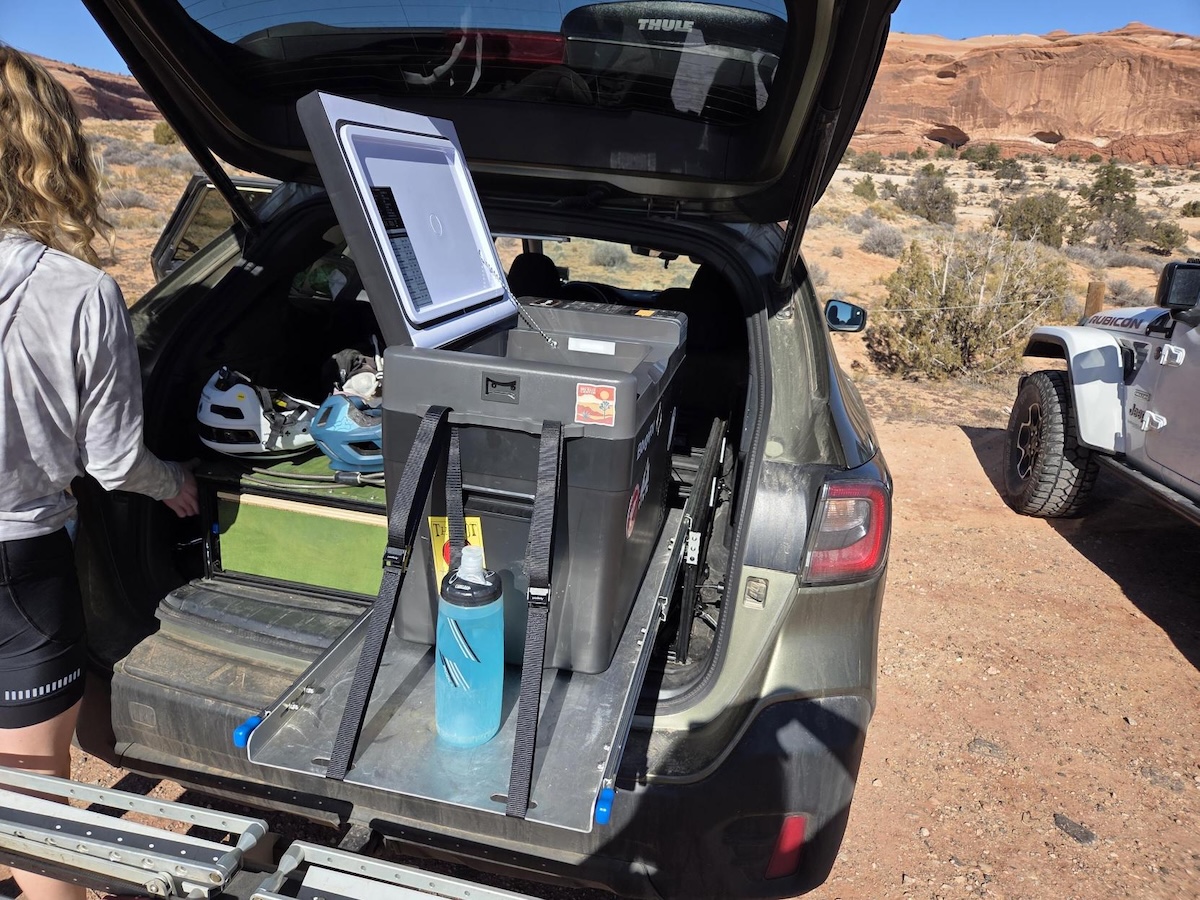
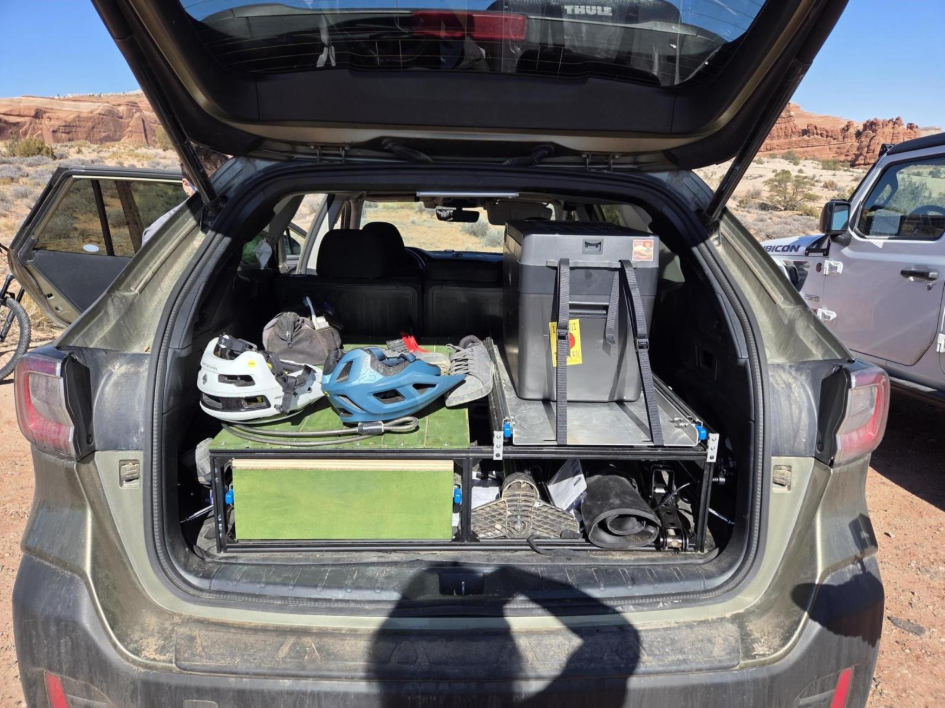 A custom-built gear drawer in the SUV’s hatch keeps climbing helmets and equipment organized and secure.
What book should every engineer read?
I think I have an engineering-specific book, but it’s one I think anyone could read. It’s turning into a movie anyways — Project Hail Mary. I thought it was pretty fun. Or really a lot of Andy Weir’s stuff. So that and The Martian, maybe cliché, but I thought the book was better than the movie, but I think they’re just fun stories where they wrap up all this problem solving and ingenuity into something sweet to make the medicine go down a little bit easier.
Rather than read an engineering textbook — no one wants to do that, not even an engineer — you can just read a fun story where it just happens to involve someone engineering their way out of a problem.
What are you reading, watching, learning, playing?
Right now, I’m reading just a normal fiction book — no engineering involved. It’s called The Institute. It’s the Stephen King book, which is actually my first Stephen King novel. I think he’s had a lot of books and he’s pretty popular, but I just haven’t gotten around to him until now. I’ve kind of just started into it, so I don’t have a lot to say about it yet.
But the one right before that I read was The Ministry of Time, and I thought that was a really good book. It was a really easy read, and it was kind of just a fun break from the world. It’s a page-turner.
What do you want to learn next?
I guess more simulation. I taught one of the more advanced classes recently, but there’s still another one. So nonlinear simulation and then also plastics simulation are the two big things that I want to learn next.
What is exciting to you right now about the future of engineering in manufacturing?
I’m cautiously optimistic about AI. There’s a lot of pitfalls and potential negative influences from AI, but basically anything that can reduce work — which AI definitely does have that potential — but also other automations or optimizations of the software that just makes it smarter to make your work easier and faster.
I mean if we can reduce the amount of work required for an engineer to still produce the same product, I think that’s always a win.
Are you using LLMs on a daily basis for work or personal?
No, I personally try to stay away from them. I’m not a big fan of them right now. Sometimes I’ll use them for writing content to help me rephrase an awkward paragraph or help develop an outline for a video or something like that, but that might be like once a month that I’ll use it.
Do you have advice to people considering going into engineering?
My advice for anyone that wants to go into engineering would be they should 100% do it, with the caveat that they have a genuine interest in engineering and that they’re not being pressured into it because they think that’s what they should do, or because their friends are doing it or their parents want them to do it.
I think it’s a lot of work, but the work doesn’t feel like work if you’re actually genuinely interested in it. I remember very distinctly one of my projects in engineering school. We were doing that robot project, and we had the entire semester to basically build a robot. Mine was a xylophone-playing robot, and I was in such a flow state — I was so engaged and interested in the project that I think I finished it a third of the way through the semester.
I remember some days I would go to the lab and be working on my project and I just worked there for 8 hours straight. And then I think on occasion — this is not a healthy thing — but I would just forget to eat because I would just go there and just be working the whole time. I just wouldn’t feel hungry because I was so into the project and then I’d just go home and repeat it the next day.
If you could time travel to any point in history and contribute to a famous engineering or manufacturing project, where would you go and what would you work on?
I think my two choices are pretty close. One of them would be the space shuttle. I think there’s a lot of glamour now and economies of scale in reusable launch platforms like Falcon 9 where it’s just so much cheaper and easier nowadays. But I think there’s something just — the Falcon 9 can never touch the space shuttle in terms of just coolness.
It flies up and then it lands like a plane. That to me just seems like a stupidly funny project of let’s just make this plane go straight up and then have it come back down. Every other rocket just looks like a stick. It just goes up like it’s a building. But that one is just funny to me. It’s like a plane.
And then I’m also — I think aviation is pretty interesting too. So maybe some of the first planes or the first jet-powered planes would be fun to work on. Now that I’m talking about it, I think the shuttle is number one and then the plane stuff is number two.
What’s an engineering problem you’d love to solve, but realistically it’s probably still like 50 years away?
This is an easy answer. I don’t know if this is an engineering thing or just a common trope, but there’s always this talk about fusion being 50 years out. They said fusion was 50 years out 50 years ago, and now they’re saying it’s maybe 10 or 20, but fusion — it seems like it’s always just right on the cusp.
You get to redesign one everyday object to make it ridiculously over-engineered. What is it, and what does it do?
I’m gonna say cars, but not the mechanics of the cars — although I’m sure there’s room for improvement there too — but all the plastic panels in cars. I despise them because if you need to work on something and you try to pry the panel off, it snaps together but then it doesn’t really snap apart. So, when you try to pull it off, half the time you’ll snap a little tiny piece of plastic and then you have to go buy a new clip or if it’s molded into the panel, now your panel doesn’t go back properly.
So I’d say all of those panels on cars — instead of having plastic snaps, if they could just screw in and you could just use a screwdriver to take it all apart rather than trying to pull on something until maybe it breaks, maybe it comes off.
You get to be Dale Ford for the day, CEO of Hawk Ridge Systems. What’s your first order of business?
I really miss having snow days. I grew up in Minnesota, so we would have snow days every now and then where there just wouldn’t be at work or school. But you didn’t really know ahead of time.
I’d like to just randomly log in one day and just tell everyone no work today — random free holiday. That’d be fun. Especially since we’re remote. Unless your internet’s out you can’t really have a snow day. And even if the kids are out, you still work.
I’m also the type of person where if I knew I was gonna have a three-day weekend, then I would plan on going somewhere, which is fun on its own. But sometimes I come back from that, and I don’t even feel as relaxed just because I was going and doing something else. So if it’s just a surprise day, you’re not gonna go on a trip or anything. It’s just get caught up on errands, watch some TV, cook something, go for a run, work on projects.
Can you tell me about a moment where you got to save the day for a customer?
One of the easy ones that comes to mind, the customer’s issues up until that moment had just been limitations of the software and helping them find workarounds. Once we logged in; we were talking about their issue, and it was one of those ones where you can see immediately what’s wrong with it. Like oh, you put in the number here and you’re supposed to type it here or something like that — a very simple, straightforward, I have exactly what you want type of fix. They were trying to do some toolbox thing or something. It wasn’t that big of a win — it just stood out as a contrast because everything before that was no, no, no, no, no and then this one was finally a yes.
What’s your approach / philosophy to serving the customer?
My big thing when talking with customers is that I think about how I would want to be treated if I was a customer. I don’t want to sugarcoat things or try to upsell them to something they don’t need.
Ideally, I’d want to work with them and figure out what they would generally benefit from and just show them that path. For helping customers — a lot of the troubleshooting that we’re doing either in classes or in mentoring, I always try to explain what I’m doing so they can follow along. If I’m at the doctor, I like when they explain what they’re doing. I try to do the same thing with customers.
I’m gonna have a bunch of questions to ask them to try to figure out what’s going on, but rather than just bombarding them with all the questions, I’ll usually try to say here’s my thought process behind this. I want to ask you this because if your answer is this, let’s do X. If your answer is this, let’s do Y.
I feel like it’s good to keep giving them context throughout and explaining why I’m gonna go check this thing — because sometimes this is off — rather than just doing it, even though it’s probably faster if I just do it. I want to let them know what I’m thinking and why it might work or not.