SHOPPING CART
SHOPPING CART
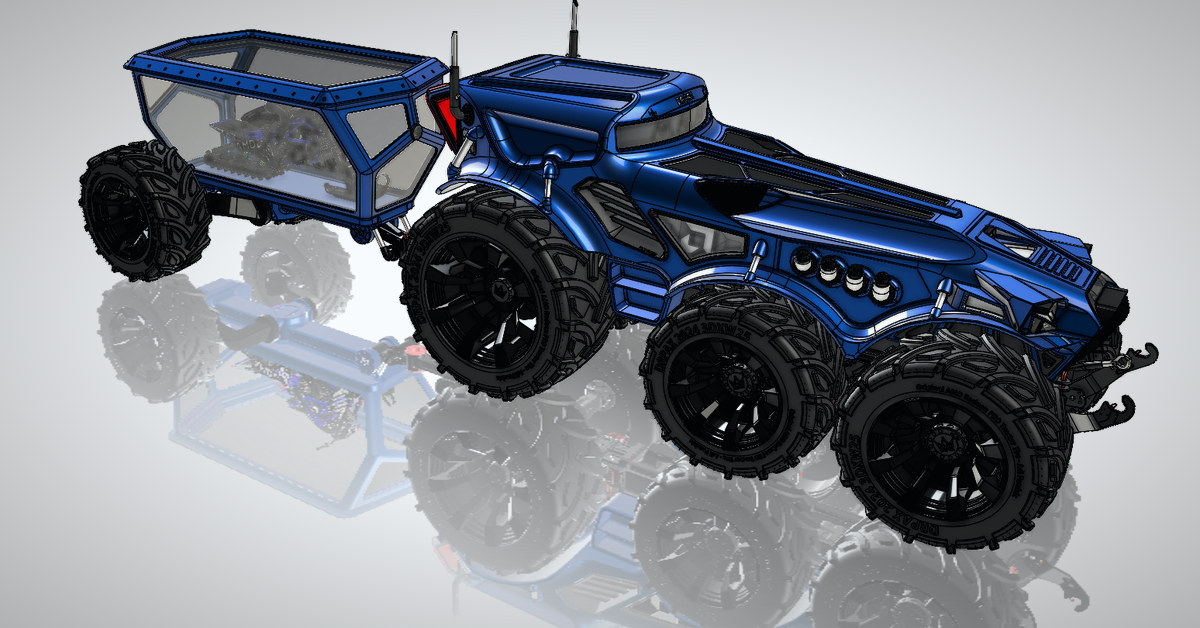
Film still used to illustrate a dramatic cliffhanger moment

Maintain Appearances When Applying Materials in SOLIDWORKS

Table of Contents


So you just finished an awesome design that took you quite a bit of time to
model, and you are feeling pretty proud of it. You immediately begin to apply
some appearances to the part to really bring it to life. This stage normally
take a considerable amount of time if you don’t have just one preset
appearance to apply. Some designs have dozens, or even hundreds of individual
appearances, most of which need to be modified in order to be the perfect
color or radiance. Well, by the time you get through the appearances to make
your part look just right, you have spent a good chunk of your time on this
model.
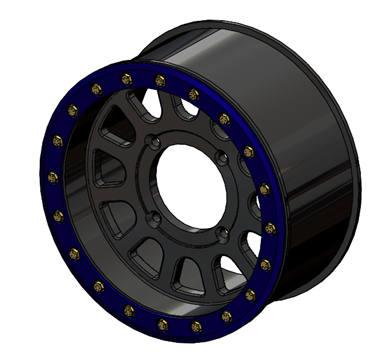
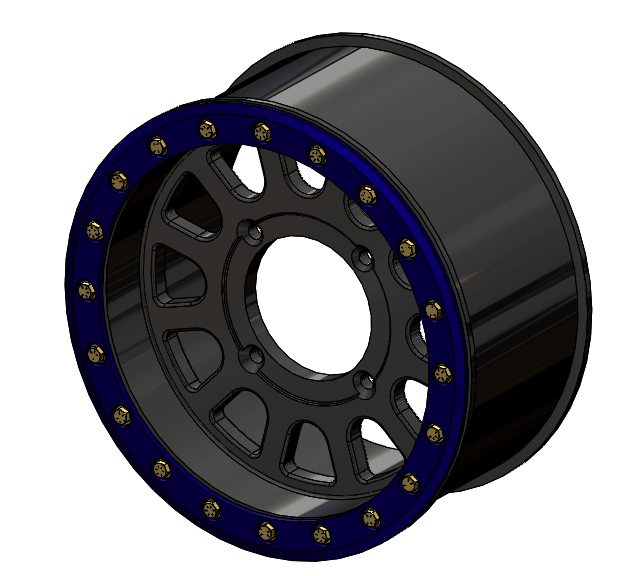
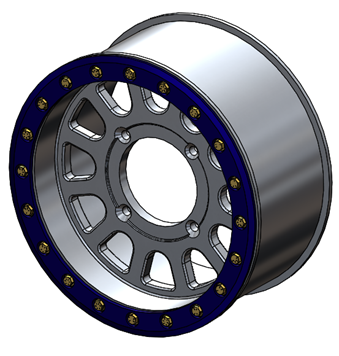
Rendered black beadlock wheel with a blue ring and gold bolts in SOLIDWORKS
The wheel with custom appearances applied before assigning a material.

That’s usually right about the time I realize I forgot to apply a material to
this part so that I can get an approximate weight. No big deal, that’s why
SOLIDWORKS comes with a fully loaded library of materials so you can use them
for measurements and simulations. So, you navigate over to the design tree,
right click on the material and select
Edit Material. Then you choose the perfect material and hit
Apply.
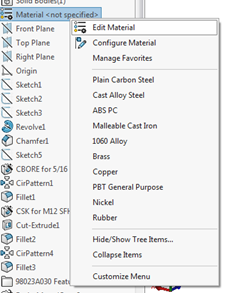
SOLIDWORKS FeatureManager Material right-click menu listing Edit Material and favorite materials
Right-click Material in the tree to open Edit Material.
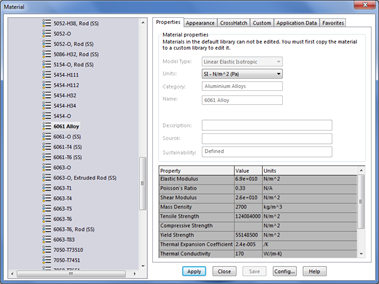
SOLIDWORKS Material dialog with 6061 Alloy selected in the aluminum alloys list
Selecting 6061 Alloy from the material library.

Ā 

If you did, you just witnessed part of your beautiful appearances disappear,
or be replaced rather. That is because when you apply a material, by default
it will also apply an appearance to match that material to the part.
Beadlock wheel rendered in plain aluminum after the material appearance replaced the custom colors
Applying the material overwrote the custom appearance.

As you can see, appearances which are applied to specific faces or features
will override the part level appearance. In fact, the appearance application
toolbar that pops up when you apply an appearance reveals the order of layers.
The lowest layer for an appearance is the part itself, followed by body,
feature, and face. (Right to left in the image below) This basically means
that an appearance on a face will show over all other appearances and so on
down the list.

SOLIDWORKS appearance target toolbar showing face, feature, body, part, and material layers
The appearance toolbar reveals the layer order, with material at the bottom.

However, your customized part appearance is gone now since it was replaced by
the material appearance. Sure we can reapply it, but why when there is an
easier fix? Start by taking a step back and hitting the undo button so you can
get that beautiful appearance back on there.

SOLIDWORKS standard toolbar with the Undo button highlighted
Undo to bring the custom appearance back.

Now let’s reapply that material the correct way this time. Right Click on the
material in the tree and choose Edit Material again. Navigate
to the material you want, but this time don’t hit the
Apply button just yet. First, go to the Appearance tab from
the material library.
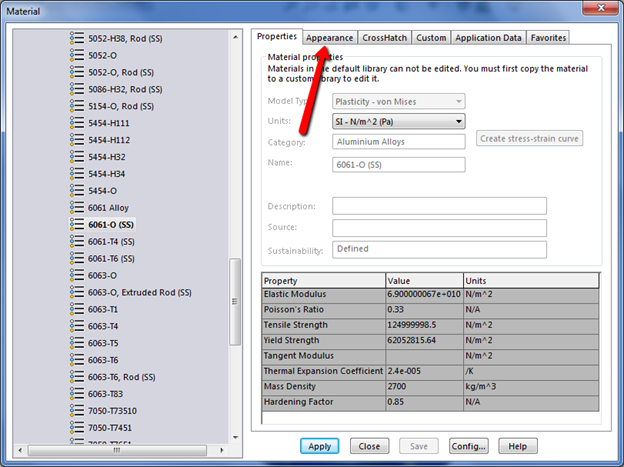
SOLIDWORKS Material dialog Properties tab for 6061-O aluminum
Pick the material again, but don’t click Apply yet.

This will show you what that boring appearance will look like. However, it
also gives us the opportunity to not apply a new appearance. We do this by
deselecting the checkbox next to Apply Appearance of:…
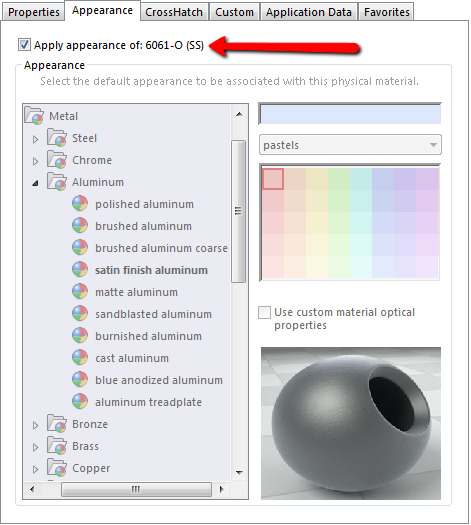
SOLIDWORKS Material dialog Appearance tab with the Apply appearance of 6061-O checkbox highlighted
Uncheck Apply appearance of the material, then Apply to keep your custom colors.

With that unchecked, it is safe to apply the material. Easy, right? Now you
don’t have to worry about following a strict process of applying materials
before appearances. Go forth and design beautiful models in SOLIDWORKS, use
custom appearances, and apply materials freely.

Picture of Tyler Braginton

Tyler Braginton

Applications Engineer Tyler Braginton hails from our Reno, NV office, and is a Certified SolidWorks Professional who teaches a variety of introductory and advanced classes across Northern California and Nevada. Tyler holds a B.S. in Mechanical Engineering from the University of Nevada-Reno, and is an expert in SolidWorks, SolidWorks Electrical, and CAMWorks. When he isn't modeling parts or teaching classes, you can probably find Tyler at a Tough Mudder competition or on his snowboard in Tahoe.

Get a Price Match

Thank you for submitting your quote! A confirmation email is on its way. Please check your spam folder if you do not receive it.

While you are waiting, check out our Resource Center or read our Blog!

Success

Register Now

Thank you for registering! A confirmation email is on its way. Please check your spam folder if you did not receive one. See you soon!

While you are waiting, check out our Resource Center or read our Blog!

success

Register Now

Thank you for registering! A confirmation email is on its way. Please check your spam folder if you did not receive one. See you soon!

While you are waiting, check out our Resource Center or read our Blog!

success

Register Now

Thank you for registering! A confirmation email is on its way. Please check your spam folder if you did not receive one. See you soon!

While you are waiting, check out our Resource Center or read our Blog!

success

Get Your Download Today!

Thank you for your download! We've sent your download to the email address you provided. Please check your spam or junk folder if you don't receive it. It may take a few minutes to arrive.

success