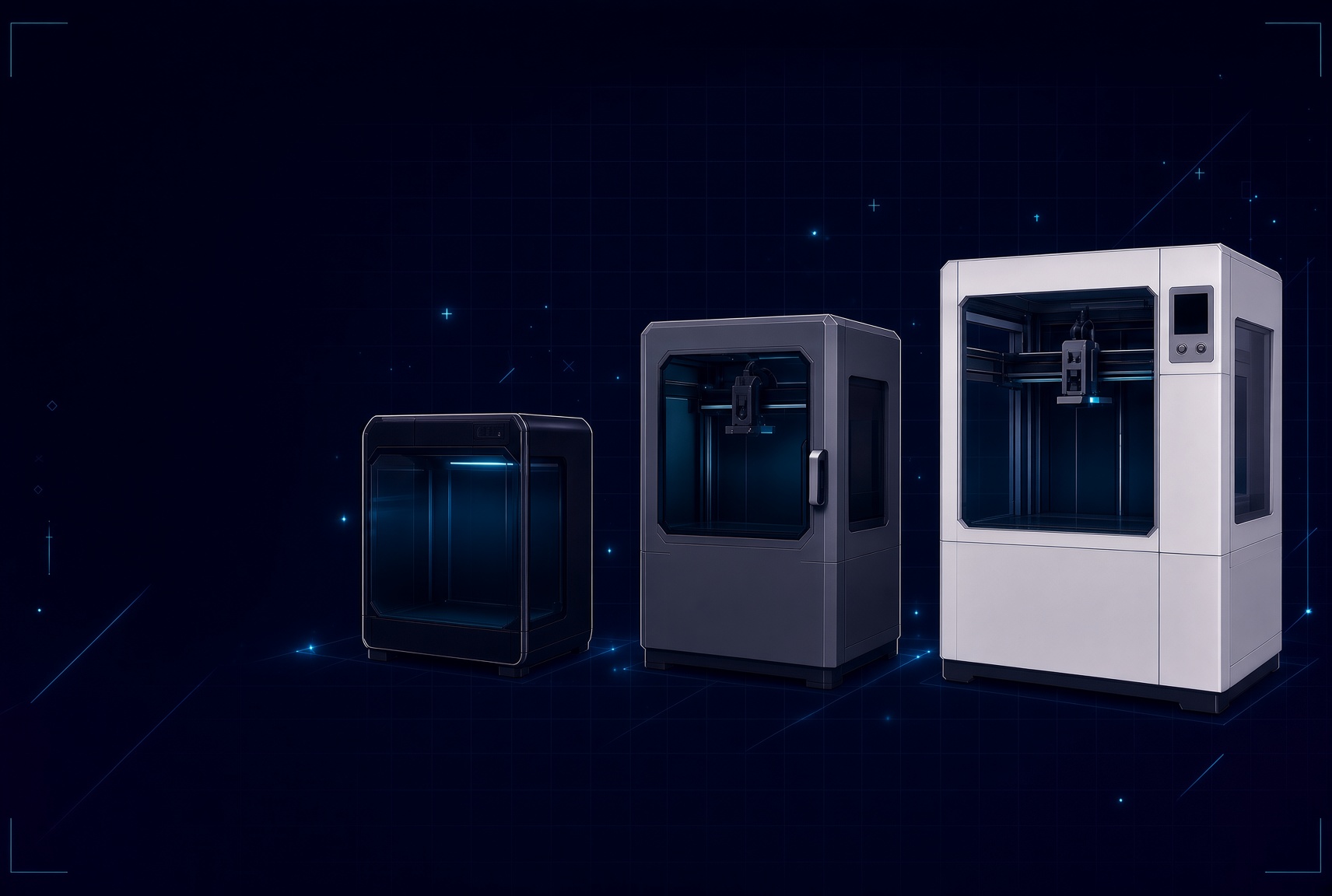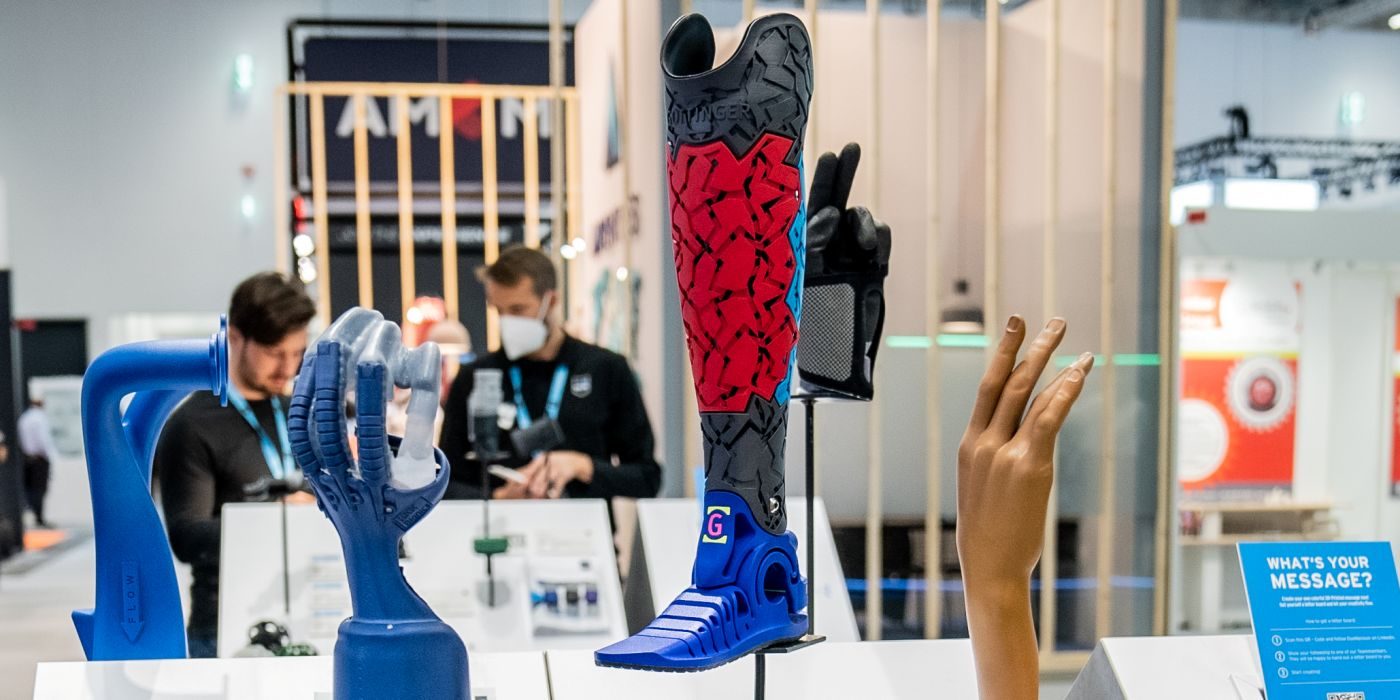
Most engineers still hear “Stratasys” and picture FDM — filament, prototypes, the printer in the corner of the lab. That picture is incomplete. In a Hawk Ridge Systems session with Stratasys, Fran Lairdieson, Sr. VP of Hardware at Hawk Ridge Systems, put it plainly: it is not your grandfather’s FDM. The story Fred Fischer, Senior Sales Enablement and Additive Manufacturing Leader at Stratasys, told is about production tooling, PolyJet realism, powder-bed volume, resin performance, and manufacturers who moved additive out of the lab and onto the line.
Hawk Ridge Systems is bringing Stratasys 3D printers into its hardware portfolio. This post captures what Fran and Fred shared about when production additive actually wins — and how to start without guessing at the wrong technology.
Watch the Full Session
On-demand landing: How Stratasys is Disrupting Additive Manufacturing
Session chapters (approx.)
- 0:00 — Welcome and Hawk Ridge Systems × Stratasys partnership
- 4:00 — Stratasys story: performance, confidence, production mission
- 7:30 — Market growth and everyday additive applications
- 10:00 — High-mix, low-volume work on the production floor
- 11:30 — Delkor: FDM to end-of-arm tools to SAF
- 14:00 — Roush Performance: supply-chain fix that became permanent
- 16:30 — PolyJet: PepsiCo packaging and aesthetic realism
- 20:00 — Medical models and surgical planning
- 22:30 — Defense, space, Orion, and investment casting
- 26:30 — Industrial FDM and production tooling growth
- 28:00 — Oreck lesson and fixture ROI (four seconds → 270+ hours)
- 30:30 — GM F900 fleet and hemming tools (as stated)
- 32:00 — ULA part consolidation; aerospace and MRO (B-52 horizon)
- 37:30 — Five Stratasys technologies portfolio
- 43:00 — Buyer’s guide, success stories, and how to engage
- 48:00 — SLS vs. stereolithography Q&A and close
Why Production Is the Additive Growth Story
Fred starts with scale. Additive manufacturing as an industry is described as roughly an $18 billion market. Manufacturing as a whole sits closer to $18 trillion. That thousand-to-one gap is why Stratasys keeps aiming past the prototype bench. Every time additive becomes relevant for real production work, the addressable opportunity jumps.
Where does that show up first on the floor? High-mix, low-volume components — the jigs, fixtures, and custom pieces people and robots actually touch. End-of-arm tooling. Guides. Brackets and ducting when conventional supply chains cannot keep up. Fran’s market view matches that shift: five or ten years ago many accounts had no printer at all; today something is usually already in the building. The open question is whether it is still stuck in prototyping mode.
The Oreck Lesson — Prototype Cool, Floor Tooling Critical
Fred tells a story that still shapes how he hears customers. About twenty years ago he visited Oreck to document a functional prototyping win on a vacuum. The engineer kept steering the conversation elsewhere: the prototype was interesting, but the tooling on the production floor was the real story.
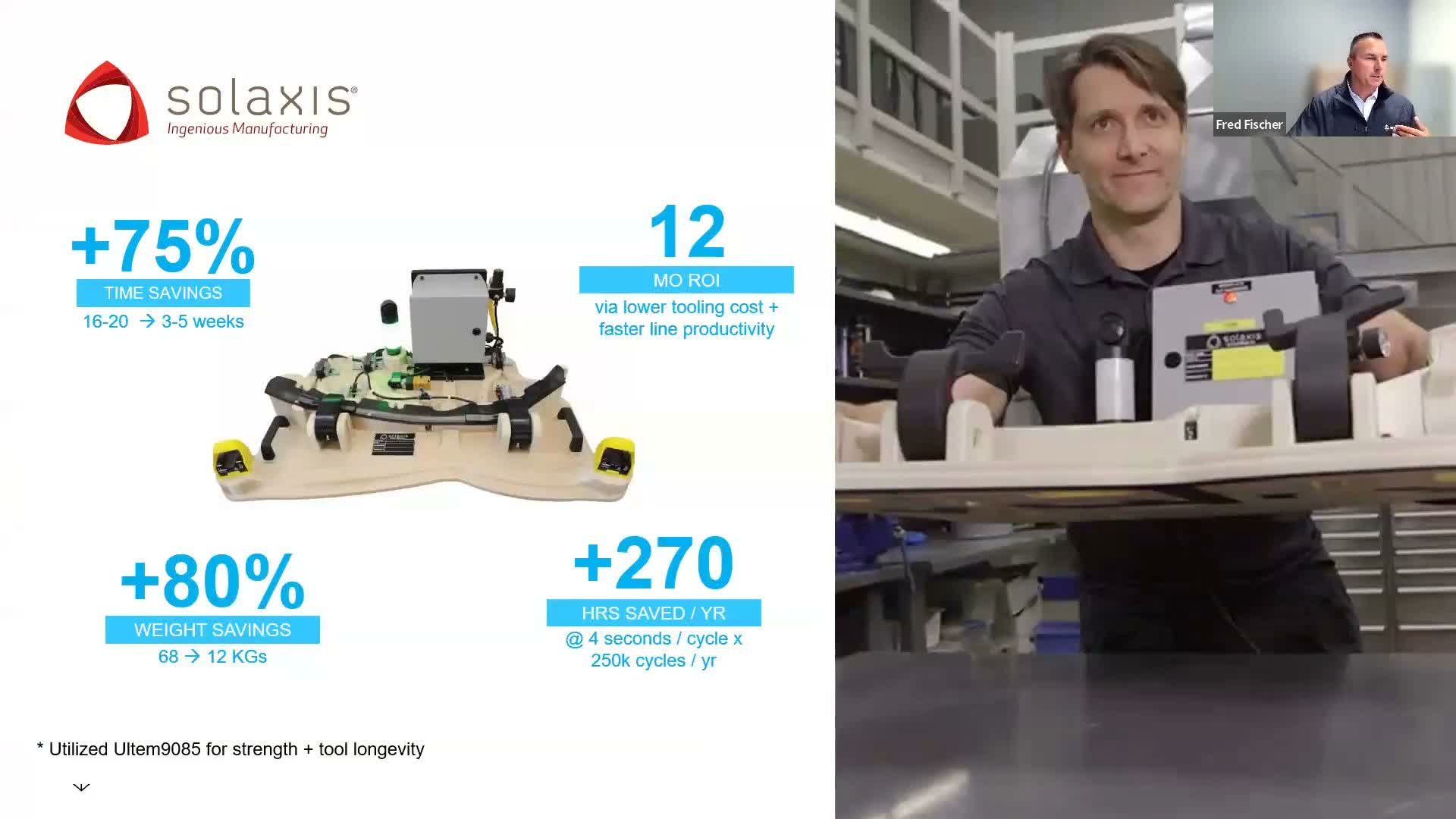
That pattern has only grown. Fred calls production tooling the fastest-growing adoption space for Stratasys FDM — fixtures that help teams make products faster, with more consistency, less scrap, and higher confidence. Automotive OEMs and tier suppliers already run jigs and fixtures across lines. The value is not “we printed a cool part.” The value is a tool that arrives sooner, weighs less, and changes how an operator or a robot works.
What Four Seconds (and Lighter Fixtures) Buy You
Fred describes one fixture: a tool used to put a gasket on a door for the automotive industry. It saved four seconds per operation. Added up across the task, he says, that produced over 270 hours of time or productivity gained, driven by the tool’s better ergonomics and lower weight.
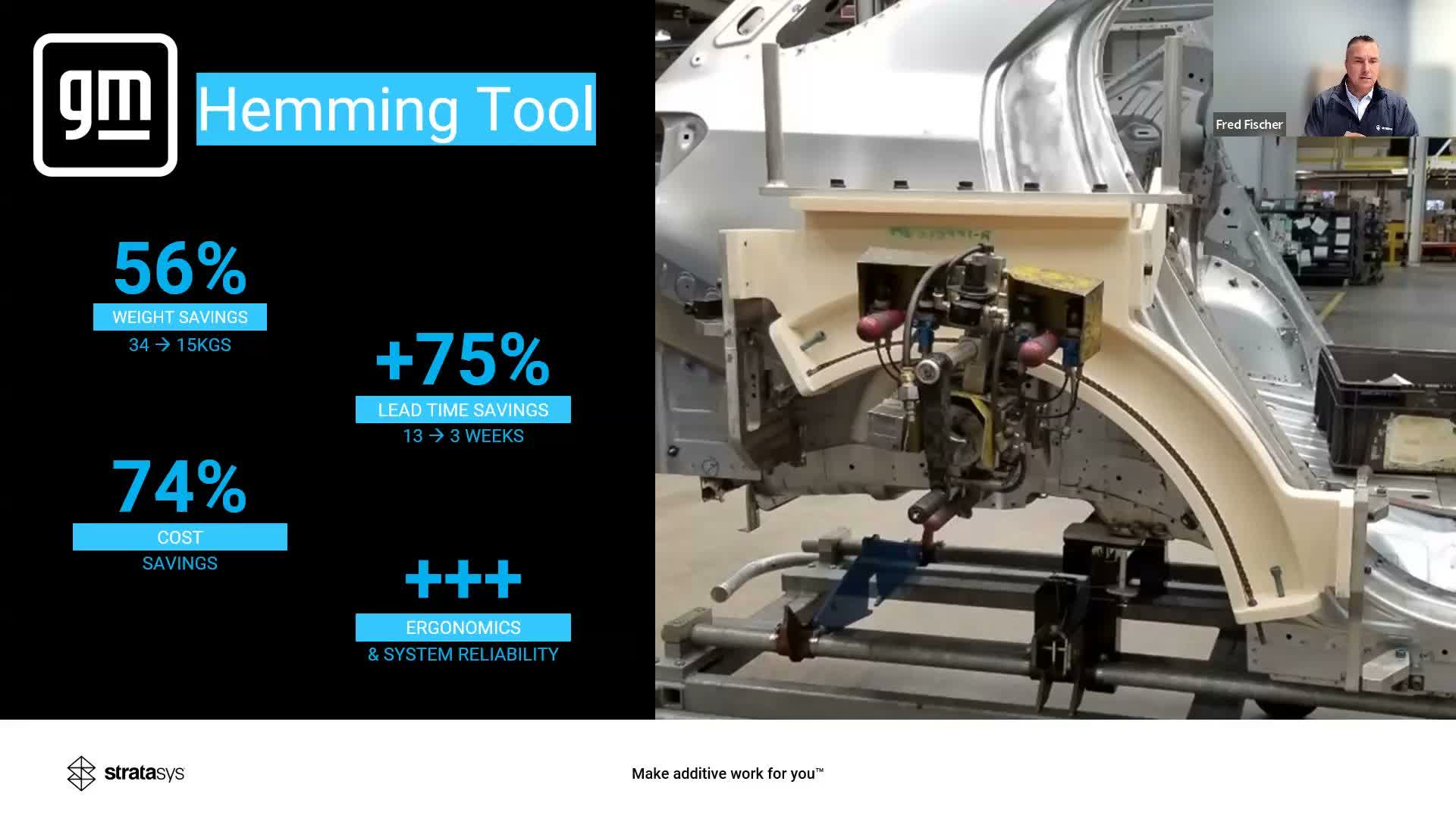
Scale that thinking to industrial FDM fleets and the conversation stops being about hobby printers. Fred points to GM as one of Stratasys’ largest automotive adopters across Americas-based production lines, saying it drives over a million dollars of savings per year, with less than a one-year ROI and an 85% utilization rate. A hemming tool for joining sheet metal shows the same pattern: big savings in weight, lead time, and the ergonomics of the operator moving the tool from one vehicle to the next.
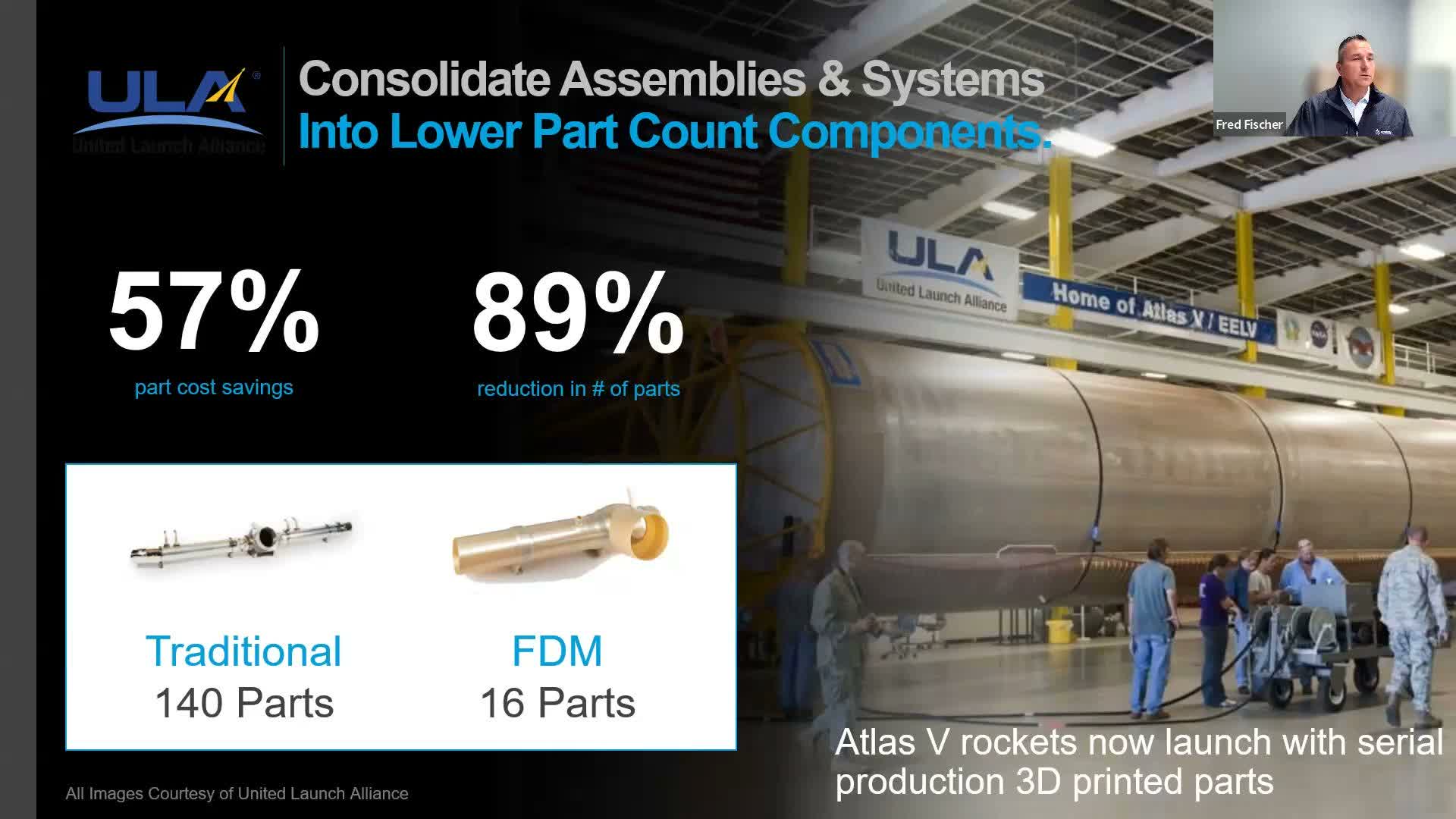
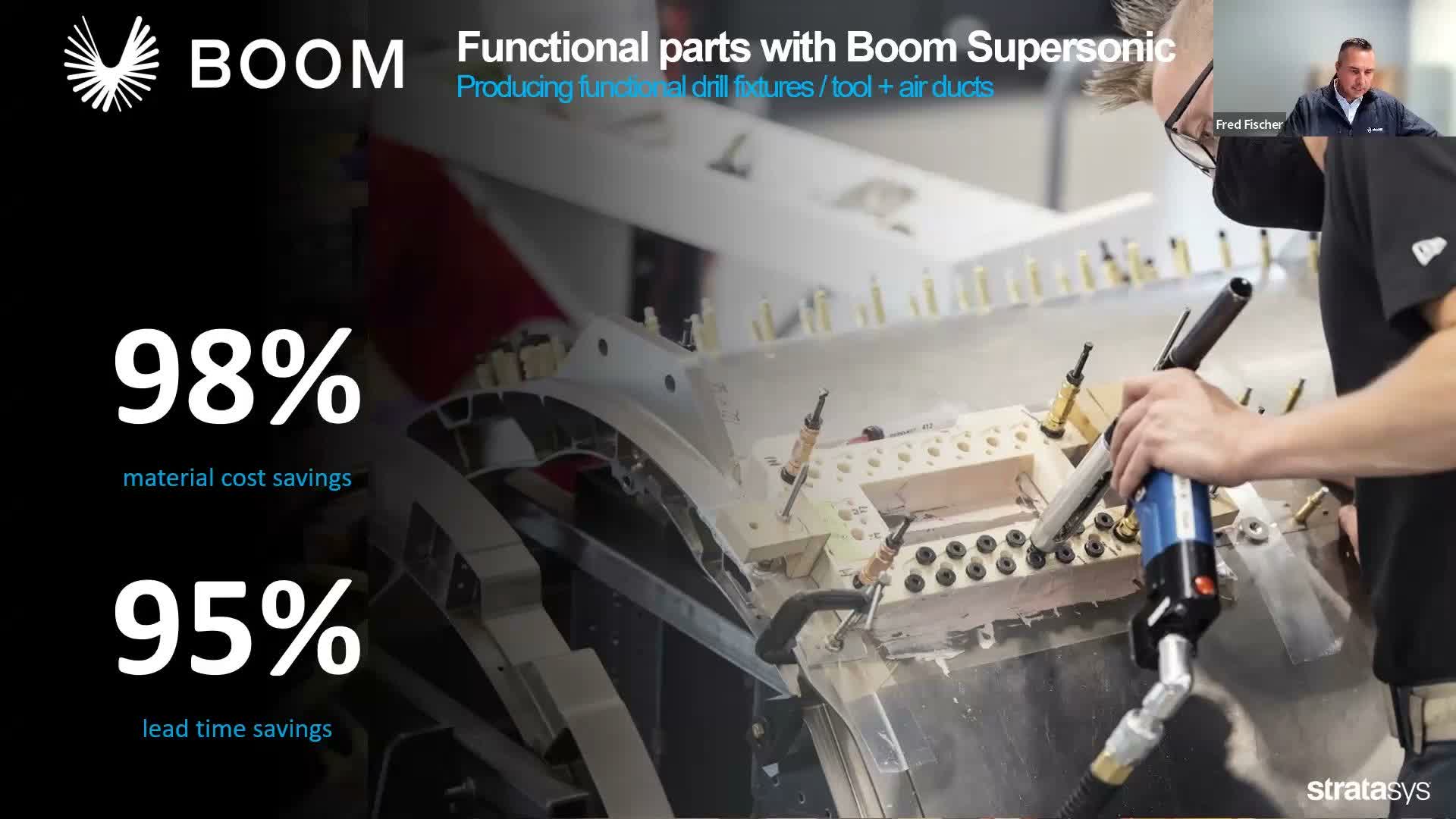
United Launch Alliance offers the aerospace version of “complexity for free.” Conventional air-conditioning ducting for a satellite on the pad was a many-piece welded or brazed assembly. The FDM version consolidated the work to a handful of printed parts — sixteen rather than roughly one hundred forty in the example shown — which means fewer joints and fewer potential failure points. Boom Supersonic’s hybrid drill blocks push the same idea: print the complex body, heat-stake durable bushings where wear matters, keep the tool alive longer on the airframe.
Beyond FDM — Five Stratasys Technologies
Fran is deliberate about not selling industrial FDM short — and equally deliberate that Stratasys is more than FDM. Fred’s portfolio walkthrough covers five processes because no single additive method fits every job, just as injection molding does not replace CNC for everything.
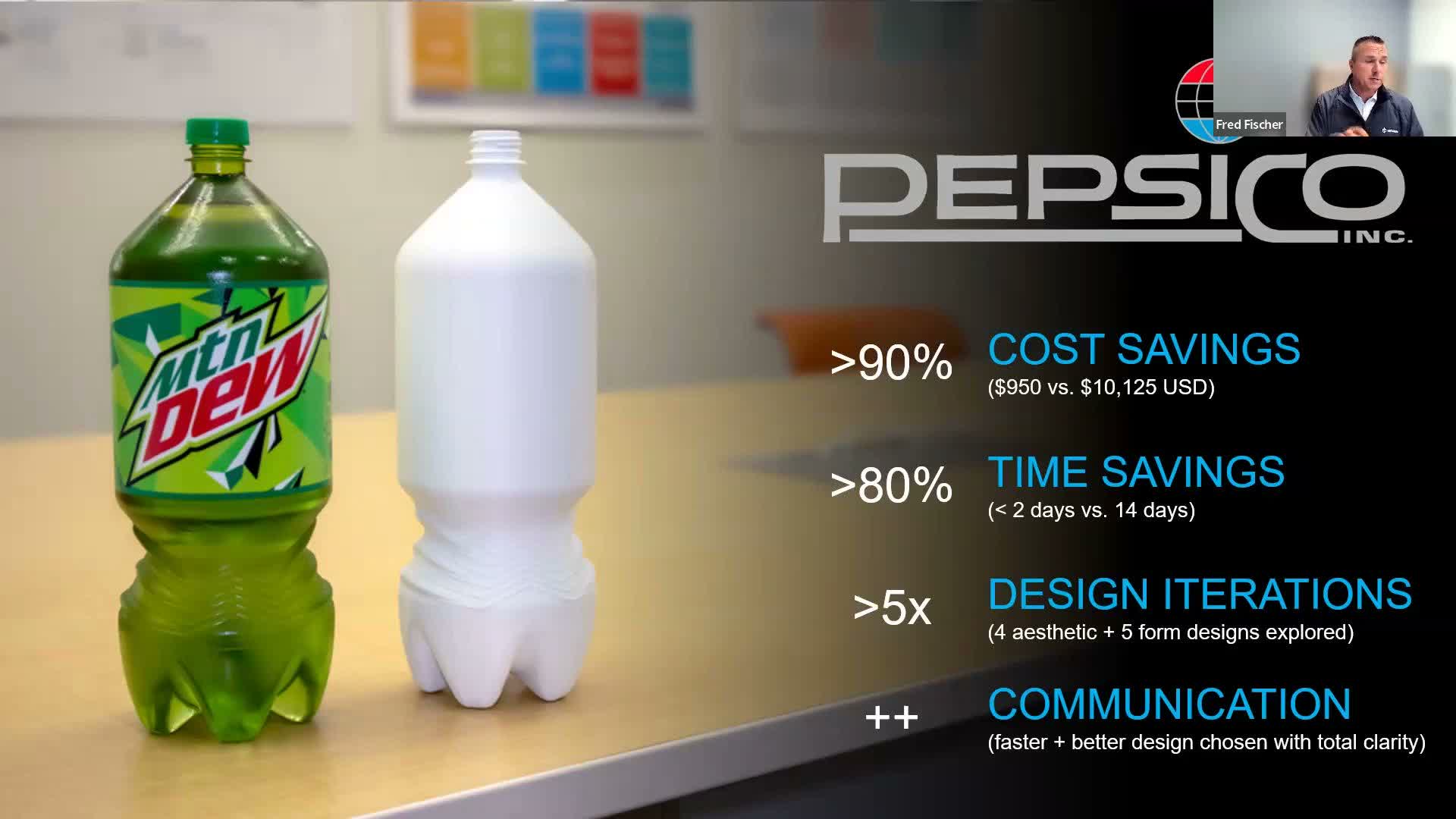
PolyJet is the aesthetic shock. Fred says its output can be lifelike, with the aesthetics—and in some instances the mechanical properties—of the final product or object being emulated. PepsiCo uses it in fast-moving consumer goods packaging. A white FDM bottle gives rough form; a PolyJet print puts full-color realism in a buyer’s hands earlier, supports more iteration, and has even appeared in commercial creative because it looks that close. Medical teams use the same realism for surgical planning and training models when a surgeon needs to study anatomy before the patient is on the table.
Stereolithography (SLA) still earns its place for translucency, large functional parts, wind-tunnel models, and investment-casting patterns. Fred walks the classic path: print the pattern (sprue, runner, and part), coat with ceramic, burn out with low ash, pour metal. Surface finish out of the mold is close enough that shops avoid heavy manual cleanup on the pattern.
Industrial FDM is the workhorse when heat deflection, chemical resistance, accuracy, consistency, yield, and aesthetics matter beyond commodity ABS and ASA. That is the gap Fred draws between Stratasys FDM and lighter FFF alternatives — especially under-hood automotive and production-floor tooling.
P3 / DLP resin targets parts roughly fist-sized and under, with a wide materials library. Fred’s honest admission: Five years ago resin usually meant trading mechanical performance for detail. He says that trade-off is largely gone — some P3 resins rival or exceed thermoplastic behavior while looking nearly injection-molded.
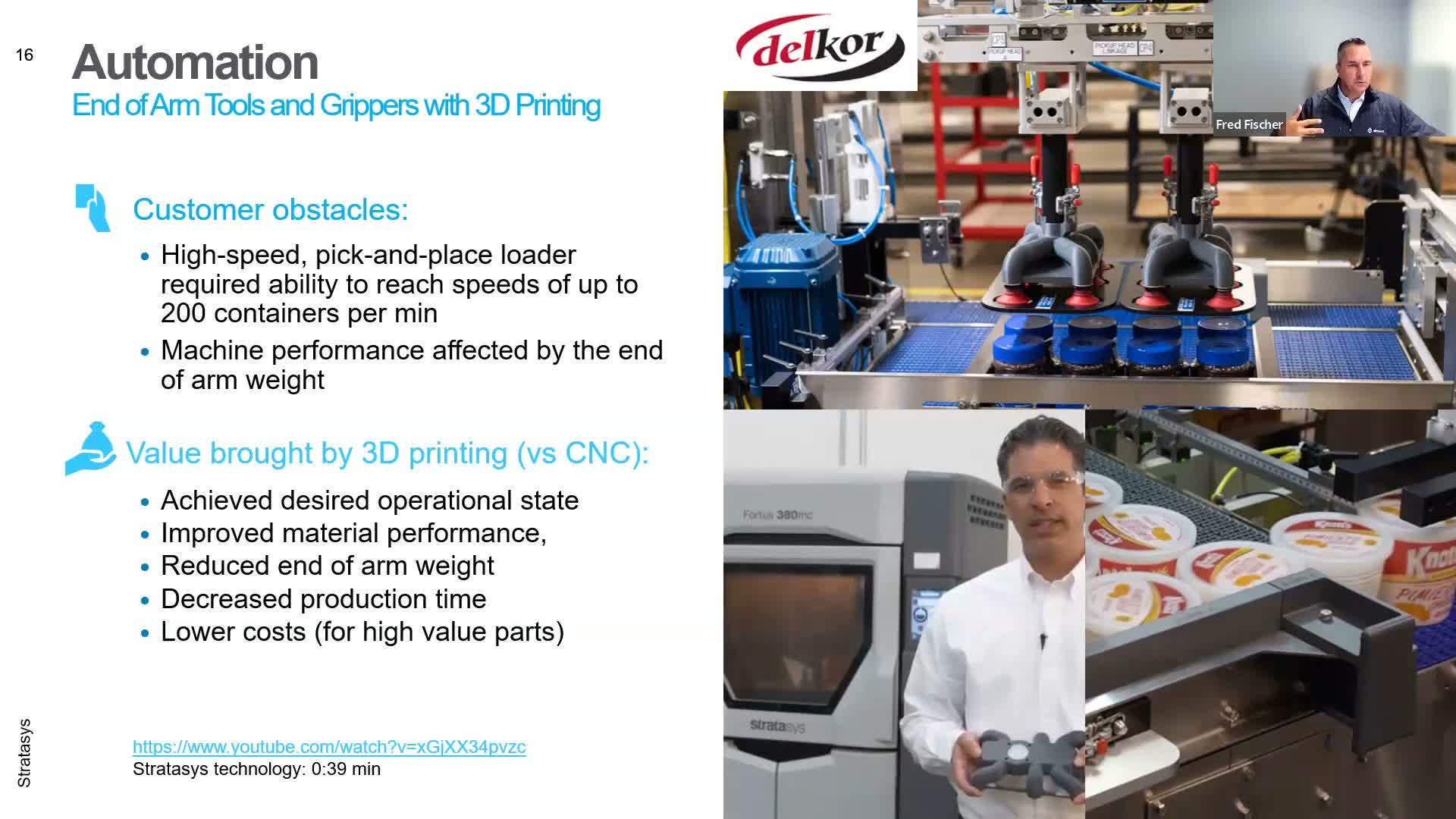
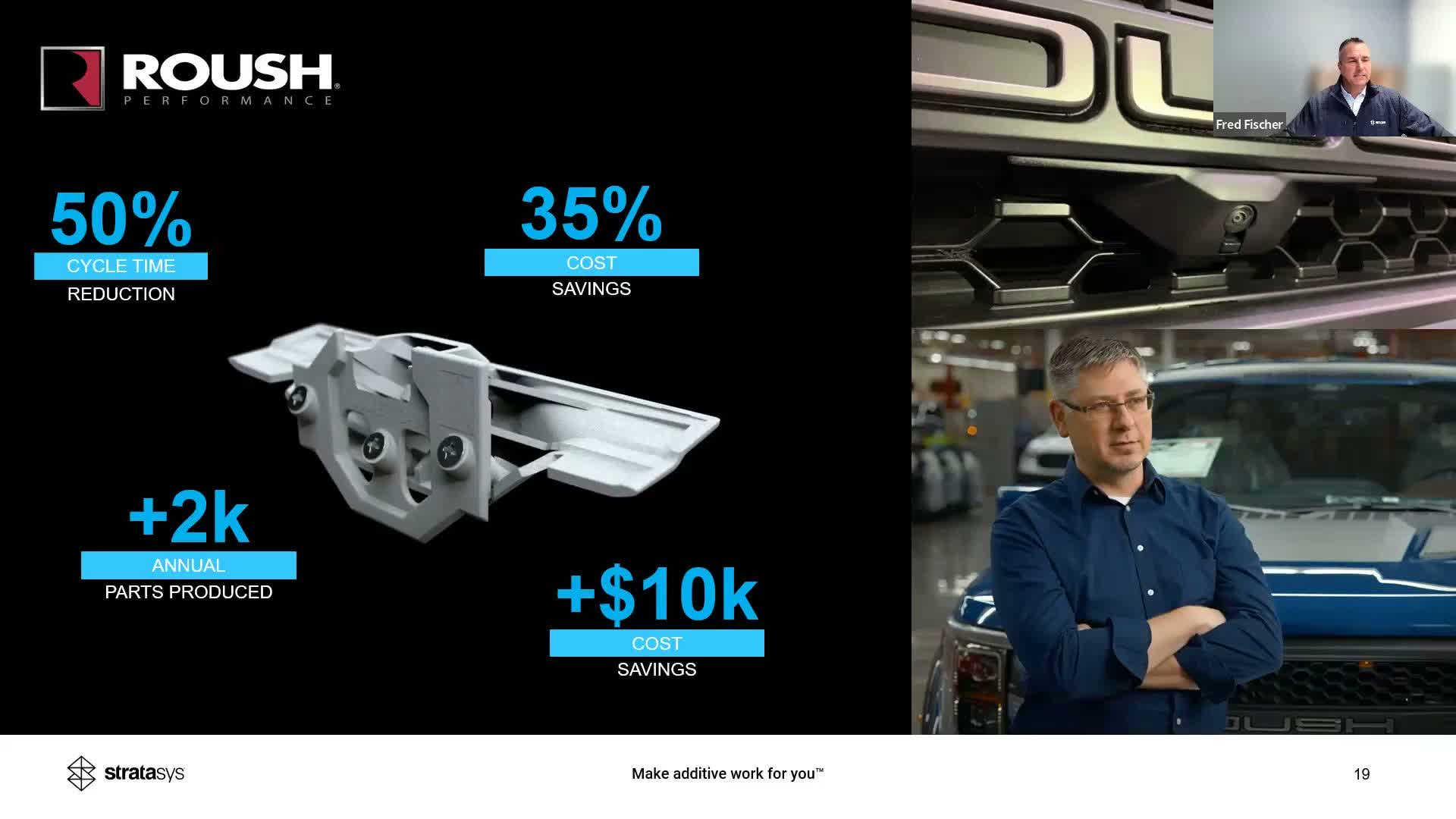
SAF (selective absorption fusion) is the powder-bed play for thousands to tens of thousands of nylon or polypropylene parts. Delkor’s journey is the teaching example: start with FDM for prototypes and durable end-of-arm tools (integrated airways “for free”), then add SAF when volume and economics demand a different process. Fred says Roush Performance used SAF when a supplier could not deliver a component. The temporary solution became permanent; the company produced two thousand components—a small bracket that holds a camera in the front grille of the vehicle—because of savings in time, cost, and flexibility.
When Suppliers Disappear — MRO and Long-Life Fleets
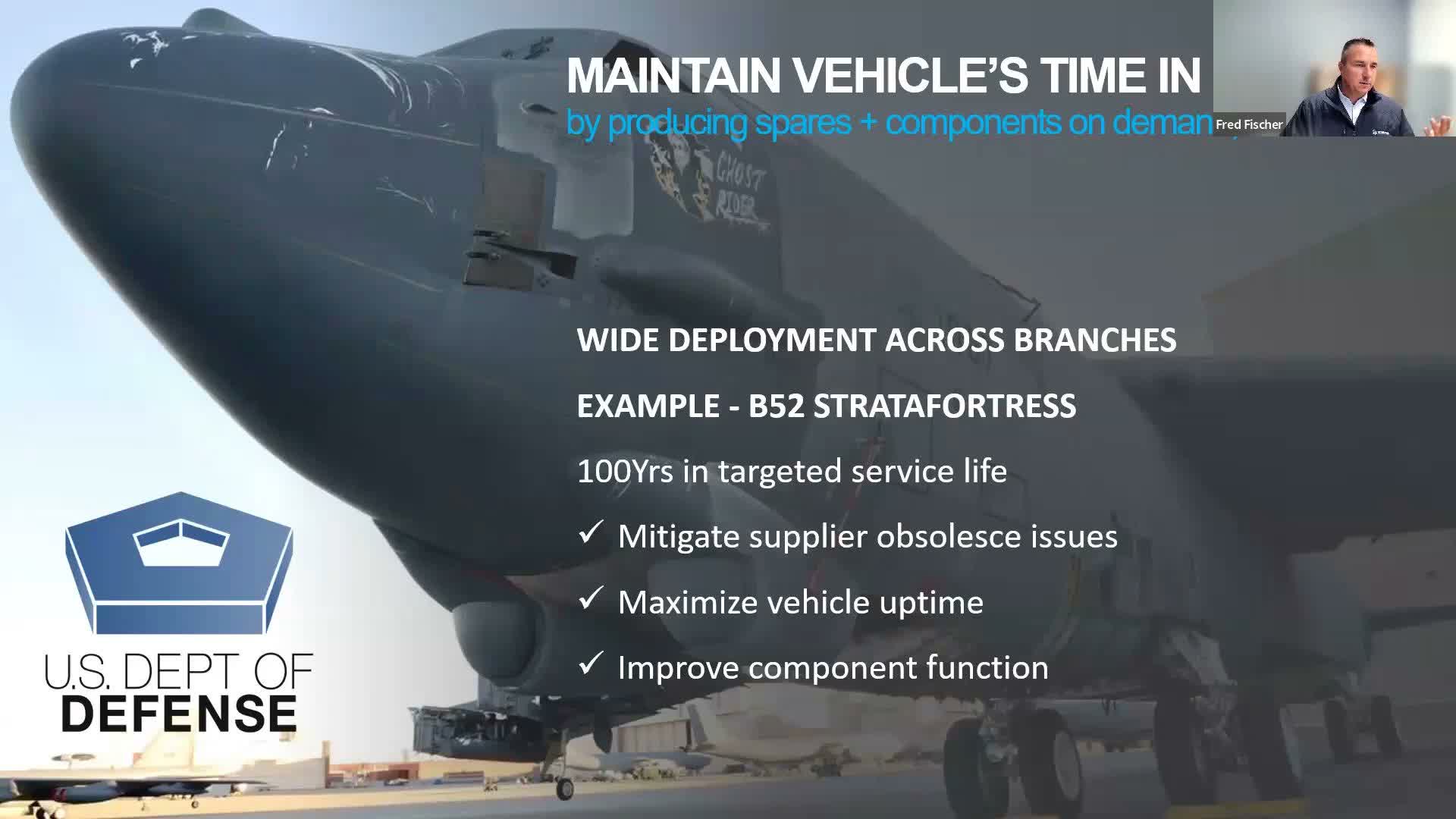
Additive also shows up where conventional supply chains cannot. Fred cites the B-52’s intended service arc from 1952 toward 2052 — a century of airframe life — and the reality that many original component suppliers no longer exist. Maintenance, repair, and overhaul teams use additive to make parts on demand and keep assets flying. He says Delta Airlines and the commercial airline space are doing the same thing for the traveling public on the A320 that a traveler may have flown on their last flight. The workflow lesson is the same as tooling: print what you need when the drawing and the material system are qualified for the job, instead of waiting on a mold or a vanished vendor.
How to Choose — and How to Start
The portfolio slide is not a memorization test. It is a reminder that if additive failed you a few years ago, the materials and processes may have moved. Hawk Ridge Systems and Stratasys want the next conversation to start with the problem, not with an STL file.
Fran hears “can you print this part?” all the time. It is a fair question. The better question is what you are trying to fix — lead time, ergonomics, scrap, supplier risk, packaging iteration, surgical readiness, casting quality. Sometimes the answer is not Hawk Ridge Systems or Stratasys. Often it is. Walking the shop floor together is still one of the fastest ways to find fixtures and bottlenecks the team has stopped seeing as optional.
Next Steps with Hawk Ridge Systems and Stratasys
If you are ready to map where production additive fits — tooling, PolyJet design reviews, SAF volume parts, or industrial FDM — start with the Hawk Ridge Systems hardware team.
- Explore the portfolio: Stratasys 3D printers
- Rewatch on demand: How Stratasys is Disrupting Additive Manufacturing
- Talk to the team: Contact Us
FAQ
Is Stratasys only FDM?
No. The webinar covers five Stratasys technologies — PolyJet, stereolithography, industrial FDM, P3/DLP, and SAF — chosen by application, aesthetics, materials, and volume.
What is “not your grandfather’s FDM” referring to?
Fran uses the line to reset expectations: industrial Stratasys FDM now targets production tooling and demanding materials (heat, chemicals, accuracy, yield), not only basic ABS prototypes.
Why do manufacturers adopt Stratasys for production tooling?
Faster deploy than many conventional tools, lighter fixtures for people and robots, design freedom (“complexity for free”), and cycle-time or scrap improvements that compound — as in the four-seconds-to-270-hours fixture example.
What is PolyJet best for?
Aesthetic realism: consumer packaging (PepsiCo example), industrial design iteration, and lifelike medical models for planning and training.
How should we engage Hawk Ridge Systems?
Bring the problem you are solving. Then contact Hawk Ridge Systems for an application conversation or shop-floor walkthrough.