What an Agile Manufacturing Floor Gains from Connected Data
Every manufacturer says agility matters. Most still fund it like a machine problem or a three-year roadmap problem. It is neither.
Agility is what happens when the answers your people already have — the released model, the current revision, the BOM purchasing will order, the process plan the cell should run — live in a validated, connected stack every team can reach in real time.
Formats, folders, and systems that cannot send and receive that information at the speed of the workflow leave engineers and operators searching, chasing, recreating, and reconciling. They know the data exists. They cannot get it when the floor needs it. You already paid for the information. The workflow still treats it as unreachable at the worst moment.
That lag is not a character flaw in the workforce. It is a systems problem that burns the people you hired to build things.
Good-quality, current data underpins almost every outcome leaders say they want: Fewer scrap events, faster change, cleaner handoffs, better calls under pressure. Without it, every tool in the wave — simulation, additive, capacity partners, even AI — is only as useful as the broken feed you give it.
So the conviction has to come first. Simulate instead of guessing. Keep one source of truth instead of six versions. Use the right path for the job. Protect the curated product record as an asset. Companies that stand behind that get to spend the next stretch of change building, not catching up. Practical test, same as it ever was: Pick one real part, one real pressure, and ask what you can get done today once the data is connected.
On the manufacturing floor, that conviction shows up as outcomes you can point at. Shared CAD and PDM so the cell cannot quietly cut yesterday’s revision. Factory simulation so CapEx follows a proven plan. Additive fixtures so tooling keeps pace with the digital change. A standing capacity path so a surge does not become panic spending. CAD and CAM that share a model so a revision does not restart programming from a cold export.
Connectivity is how agility becomes a word that earns its keep.
Key takeaways
- Agility is validated, connected information available when people need it — not faster hardware and not a transformation deck.
- Own one reachable source of truth.
- Prove risky process changes before you move steel.
- Keep physical aids and capacity options on the same clock as the digital change.
- Start with one real job where handoffs already hurt.
How Connected Systems Stop Wrong Revisions on the Shop Floor
Engineering released a revision, but the cell is still cutting from a print or inbox copy. You owned the answer. The floor could not reach it in time. Agility here is one buildable record every shift can query — not a meeting that re-negotiates the current BOM.
Knapheide runs hundreds of work-truck configurations across three shifts. With DriveWorks on SOLIDWORKS, Engineering Manager Justin Steele’s team turned configured bodies into models that go directly to the shop floor, “increasing our overall design efficiency and manufacturing.” Their customer story also ties SOLIDWORKS PDM and eDrawings into real-time 3D access across shifts.
Decimal Engineering’s Jason St. Pierre put the same idea in CAM language: once CAMWorks ShopFloor was live, “everything related to a job is now accessible from the shop floor… without having to call engineering.” Shop-floor revision control is a shared vault or viewer tied to the same model, not paper travelers rebuilding truth later.
How DELMIA Factory Simulation Validates Production Changes Before CapEx
Sometimes the problem is not the revision; it is the plan. Guessing at a cell layout in a conference room is the opposite of agility. Rearranging steel to discover the bottleneck later is how CapEx teaches the hard lesson.
DELMIA factory simulation on the 3DEXPERIENCE platform is built for that proof step: plant layout, process flow, and virtual robot programming validated before steel moves on the floor. Simulate the change on something real, then commit.
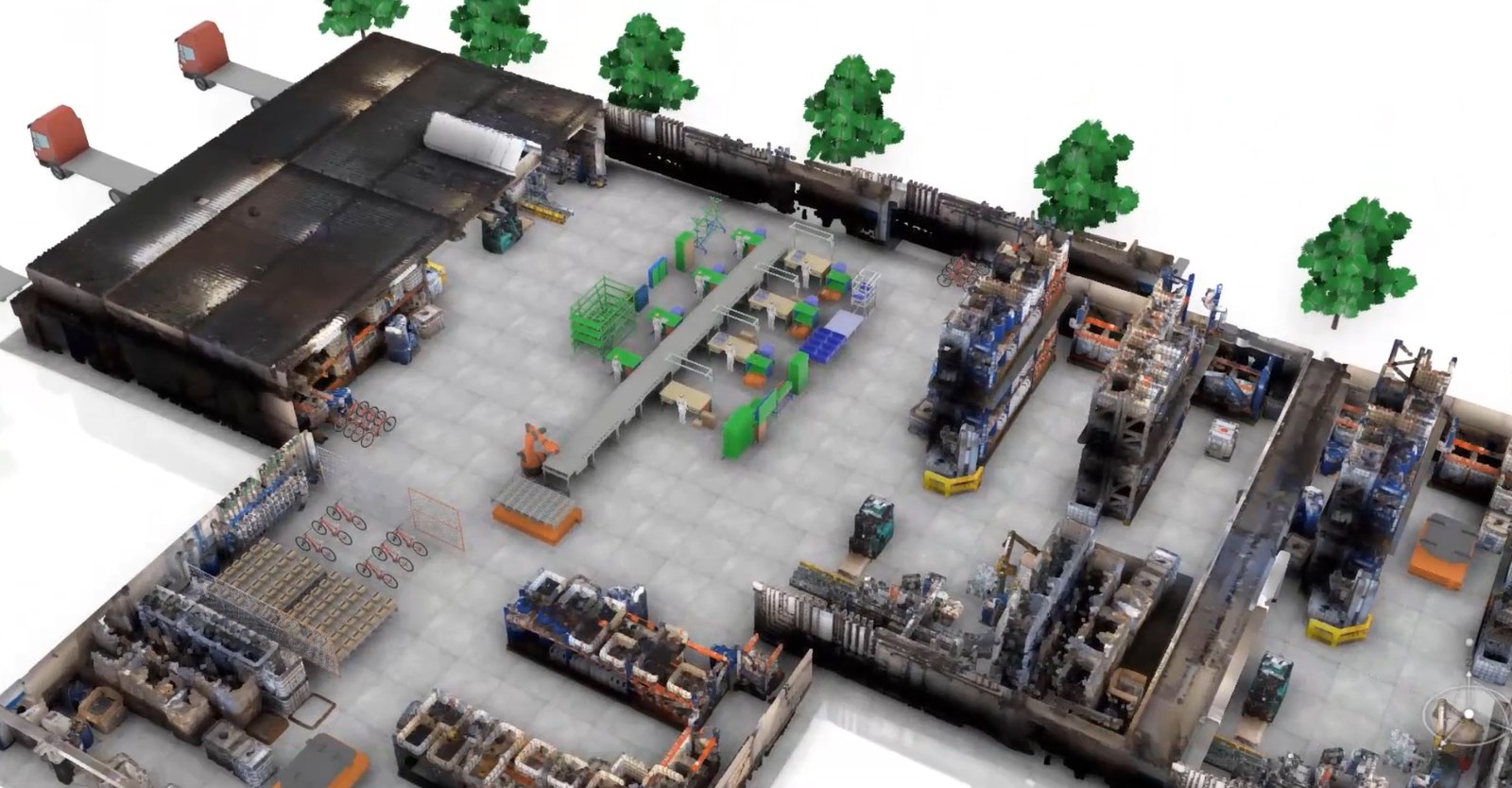
Connectivity here means the process plan is tested against a digital twin of the cell, not against hope in a meeting.
How Additive Fixtures Cut Shop-Floor Tooling Lead Time
Even with clean data and a validated plan, agility dies when the floor waits a week for soft jaws, EOAT, or a bridge fixture. The digital change was ready; the physical aid was not. Connectivity includes the path from intent to something the cell can hold.
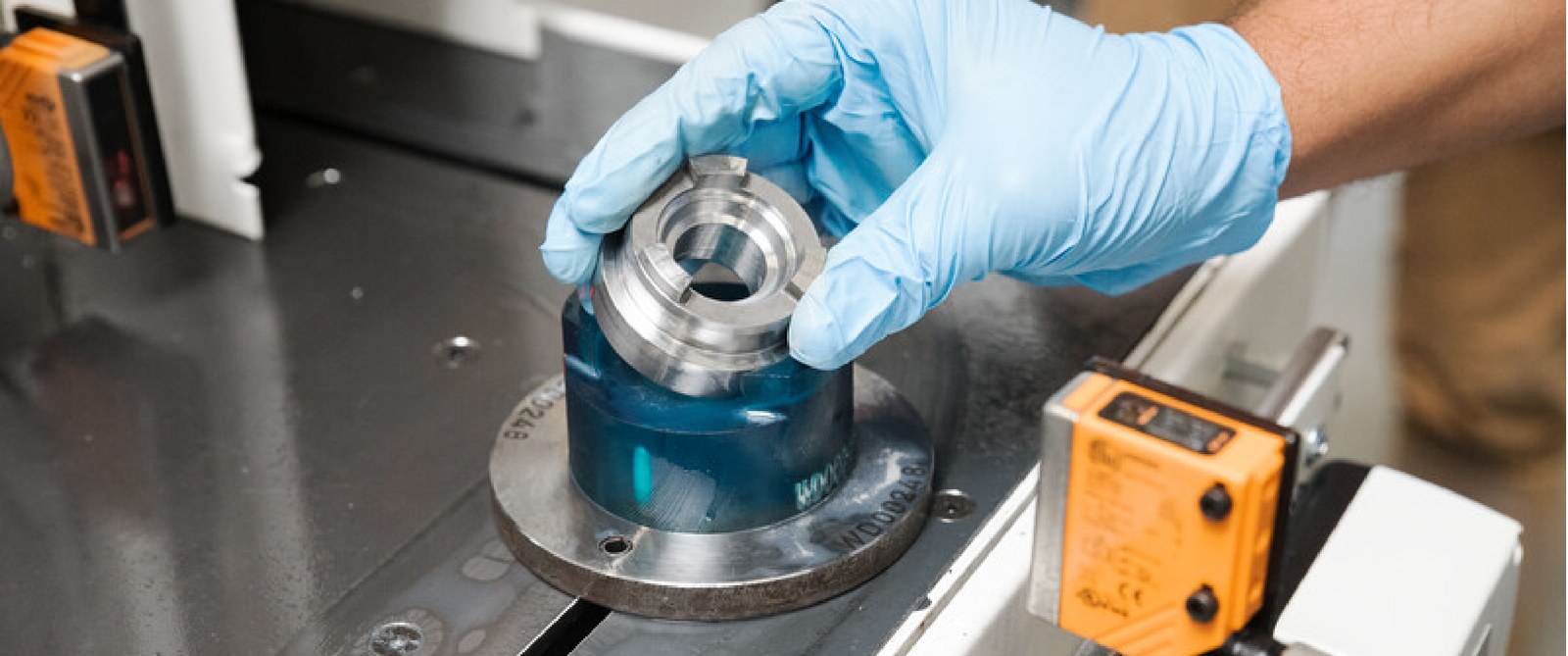
Farason Corporation builds CPG automation on Markforged (X7 / Onyx). Christian Weder’s team stopped pausing projects for a week-plus wait on machined parts and deployed 80+ printed small-package containers after prototyping won the bid. When fixture lead time gates every ECO, additive on the shop schedule is how the physical side keeps pace with the digital one.
How Manufacturing Capacity on Demand Absorbs Volume Spikes Without CapEx Panic
Well-run floors still hit walls: a surge order, a launch volume that does not justify capital, or a process they do not run in-house. Buying a machine for a three-month spike is how CapEx becomes idle metal. Agility here is a standing path for capacity, decided before the order book jumps.
Interlink Engineering treated Manufacturing-as-a-Service as a standing staircase, not a panic quote. Dylan Pratt: “There are stair steps along the way to production. A3D Manufacturing has options all along that staircase… Even without a huge budget, you’ll be able to get to the point of releasing your product.” Sebastian Arevalo’s team made that path ordinary practice — thousands of parts through A3D, rapid turnaround when internal capacity was the wrong tool for the job. Hawk Ridge Systems routes the same option through Manufacturing as a Service. Capacity agility is a pre-wired partner path, not an emergency spending conversation when the order book jumps.
How Connected CAD/CAM Makes Design-to-Cut Changes Cheaper
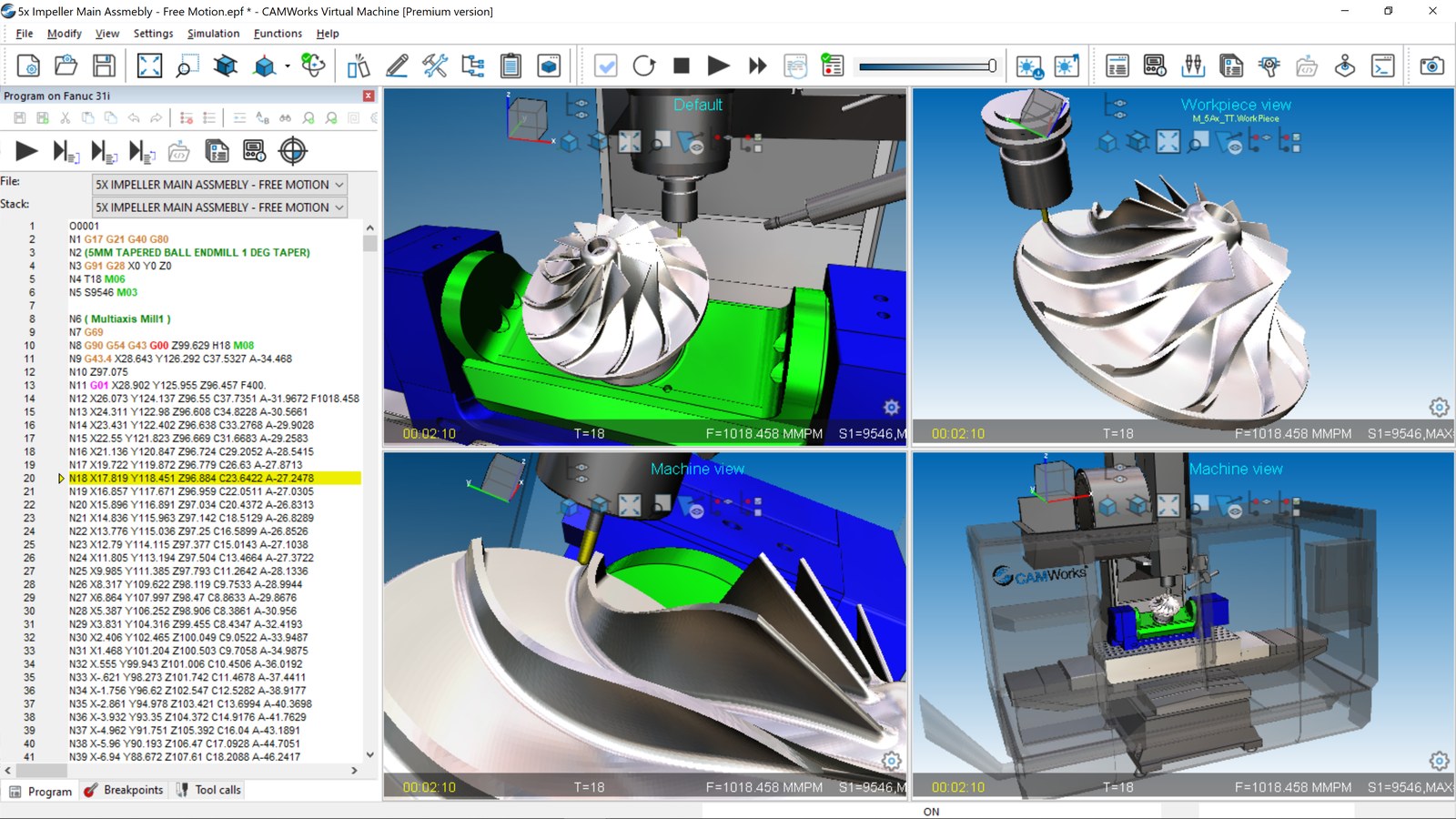
When CAD and CAM share the same model, a revision does not restart programming from a cold export. That is connectivity at the spindle: fewer handoffs, less re-entry, less waiting on a system that cannot keep up with the change.
RPG Off-Road brought machining in-house on SOLIDWORKS and CAMWorks, moving design to manufacturing in under an hour and eliminating about $40,000/month in outsourced machinist labor. Speedway Motors attributed a 300% increase in production volume since 2016 in large part to CAMWorks TechDB reuse and CAD-linked toolpaths.
How to Sequence Shop-Floor Agility from Customer Evidence
Conviction matters as much as tools. Treat the current, validated product record as something worth protecting, then modernize in the order that pays off first. Shared product context comes first, because if the floor can still build the wrong revision, nothing else sticks. High-risk process bets belong offline when a twin exists — that is the job DELMIA is built for. Kill tooling lag next, as Farason did. Pre-wire overflow capacity, as Interlink did with A3D, so CapEx is not the only valve. Where programming lag recreates the fire drill, keep CAD and CAM continuous.
Start where friction already costs scrap, overtime, or idle cells. Ask what answers people only get by chasing someone else, and count the handoffs on one part from design change to finished piece. That first project usually names itself.
How Hawk Ridge Systems Connects Design Tools to Manufacturing Workflows
Hawk Ridge Systems assesses, implements, integrates, trains, and supports connected workflows so tools become habits on the floor, including manufacturing services through A3D. The proof is what customers did when validated data and the right path for the job replaced hunting and guessing. For an outside read on your handoffs — released design to traveler, cell twin, fixture lag, or surge path — a Business Assessment delivers a prioritized plan so you modernize in the order that pays off fastest.
Ready to talk it through? Contact Us or book a Business Assessment with Hawk Ridge Systems.
FAQ
What Makes a Manufacturing Floor Agile?
An agile floor absorbs design changes, demand swings, and process experiments quickly because validated data, tooling options, and capacity paths stay connected and reachable when people need them — not because every machine is new.
Do We Need Every Tool Before We Start?
No. The densest proofs cluster around one pressure at a time: shared released data, offline validation of a risky cell, additive fixtures where lead time gates ECOs, or a standing overflow path. Pick what you can get done on a real job first.
How Is MaaS Different from Hiring a Job Shop Once?
MaaS is a standing capacity relationship under a known partner path, so surge work is not a scramble for quotes every time. Interlink’s A3D staircase language is the clearest customer framing here.